

Scientific Name: Upupa epops
IUCN Status: Least Concern (In continuous decline)
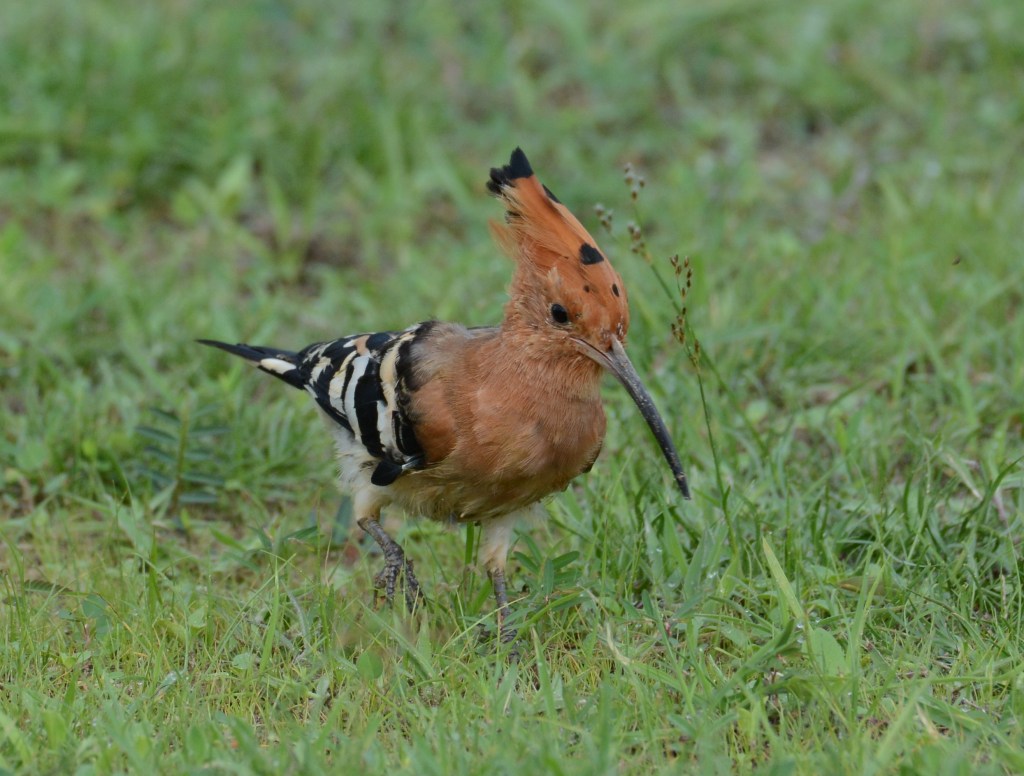
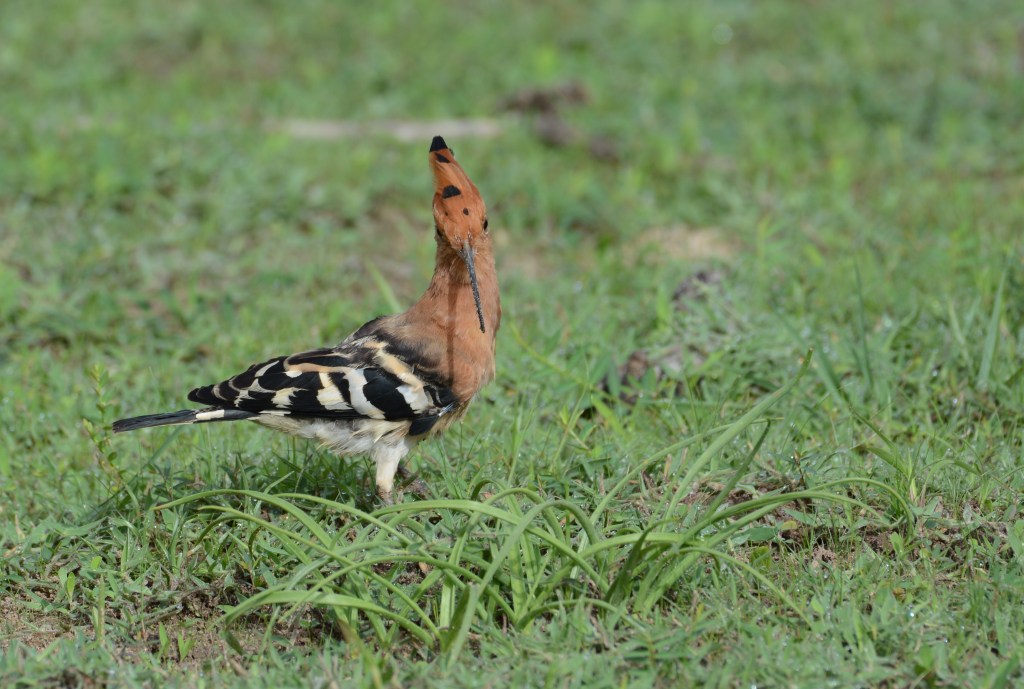
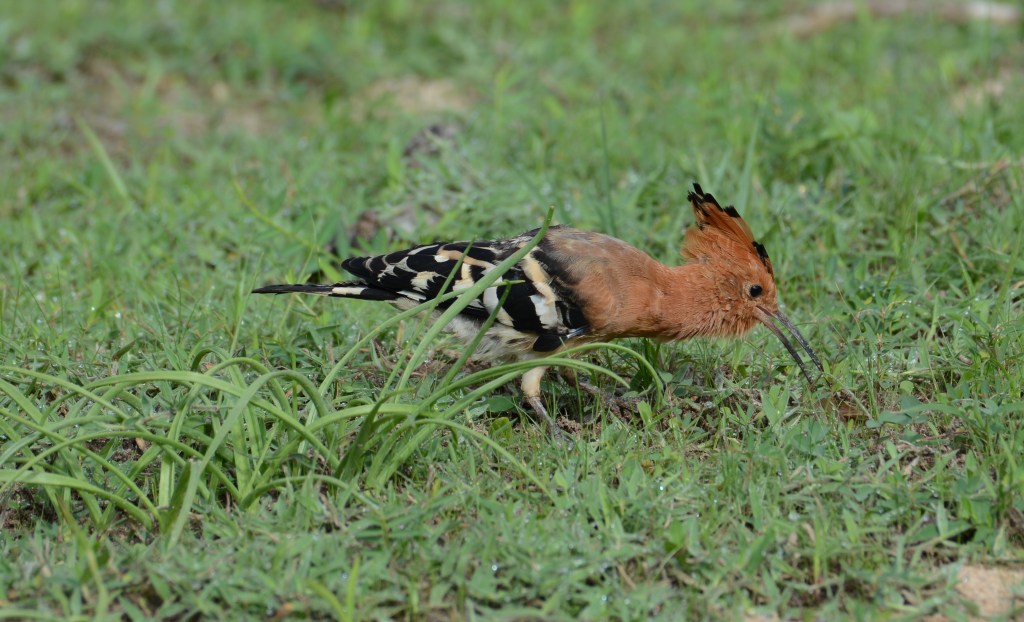
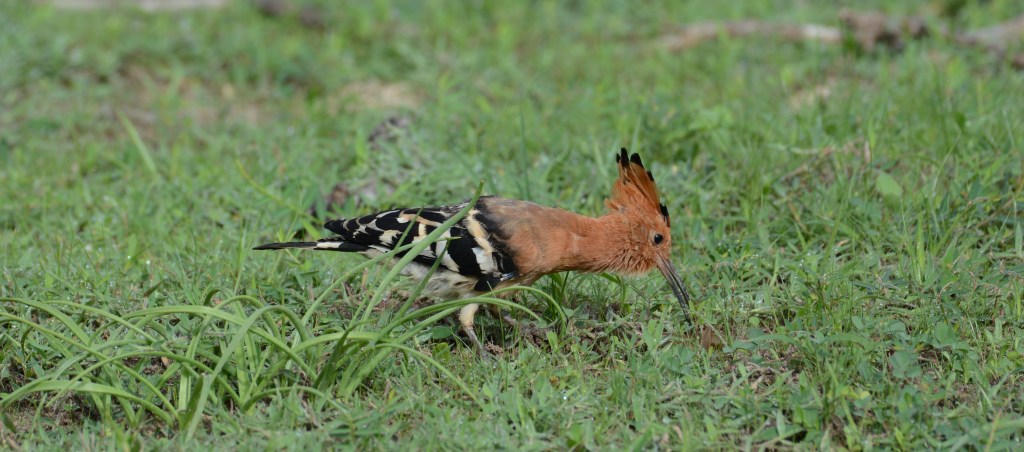
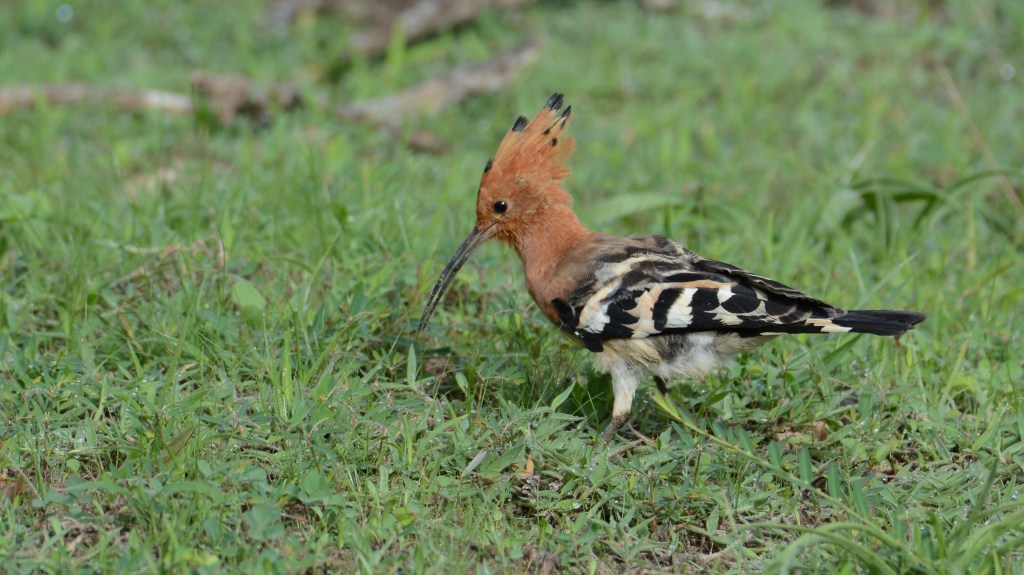
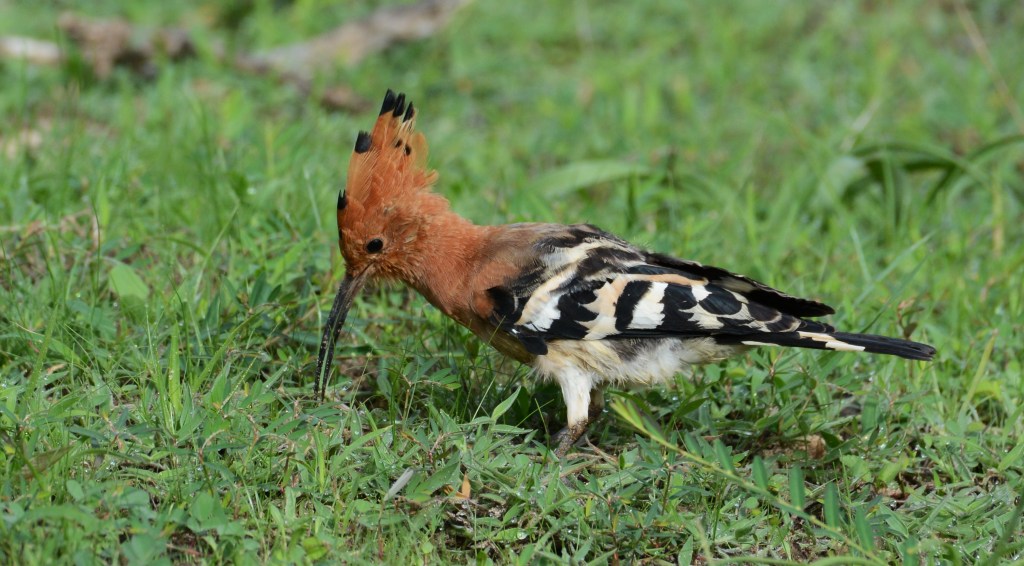
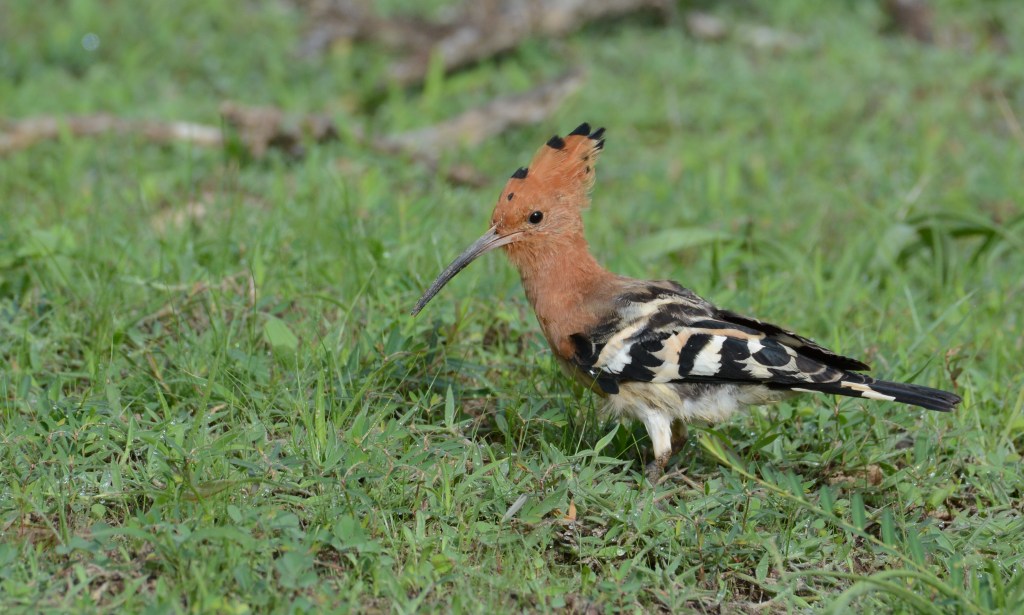
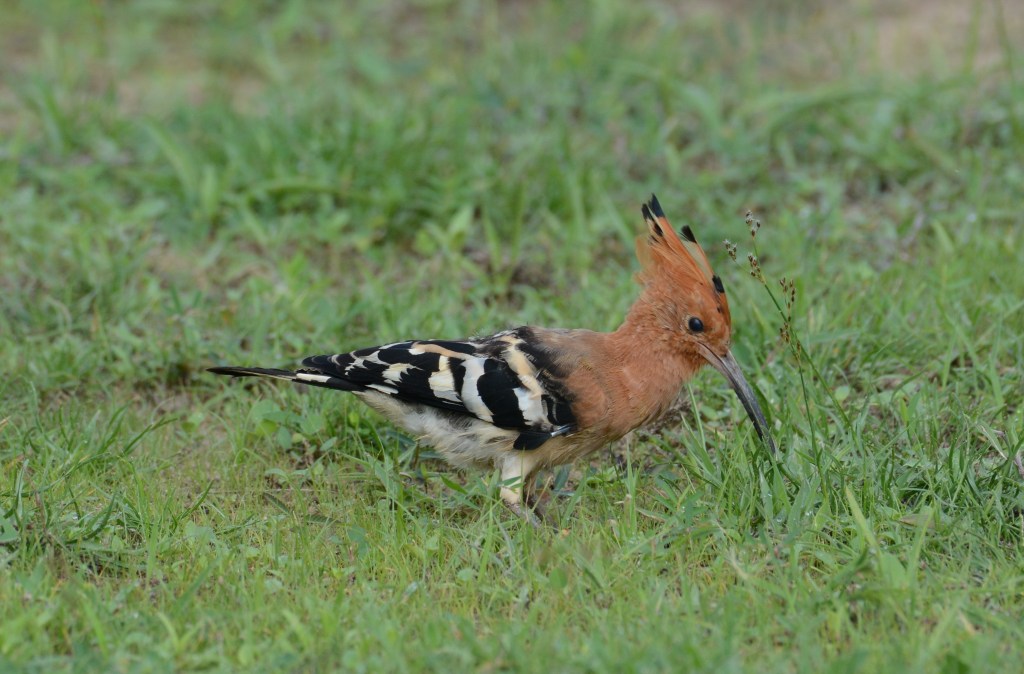
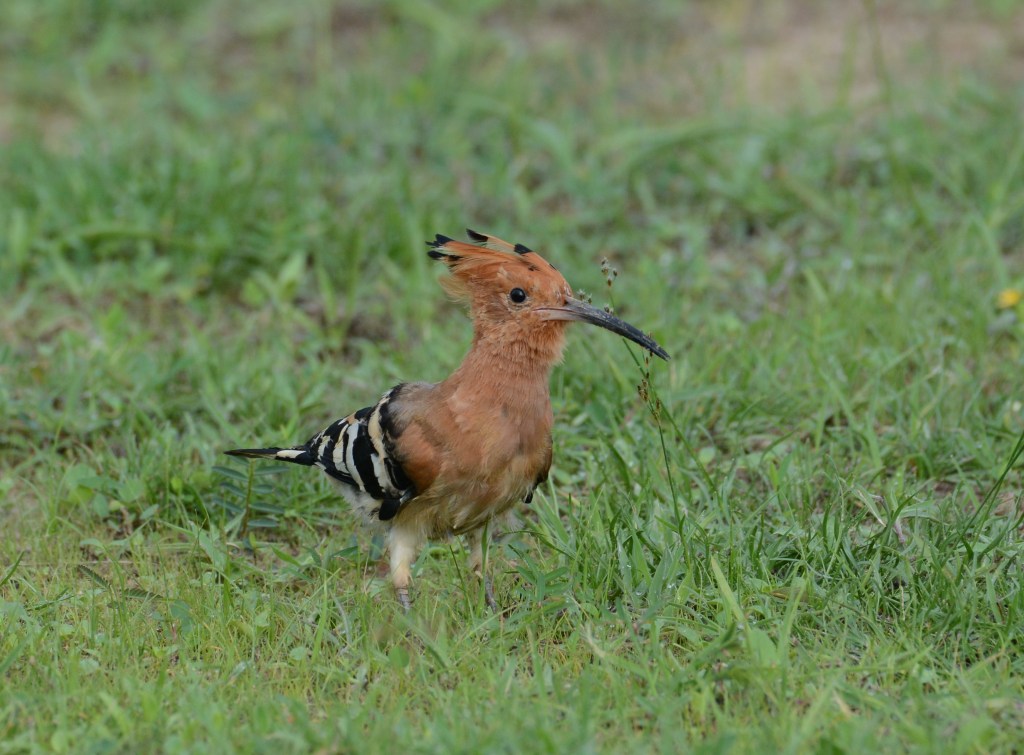
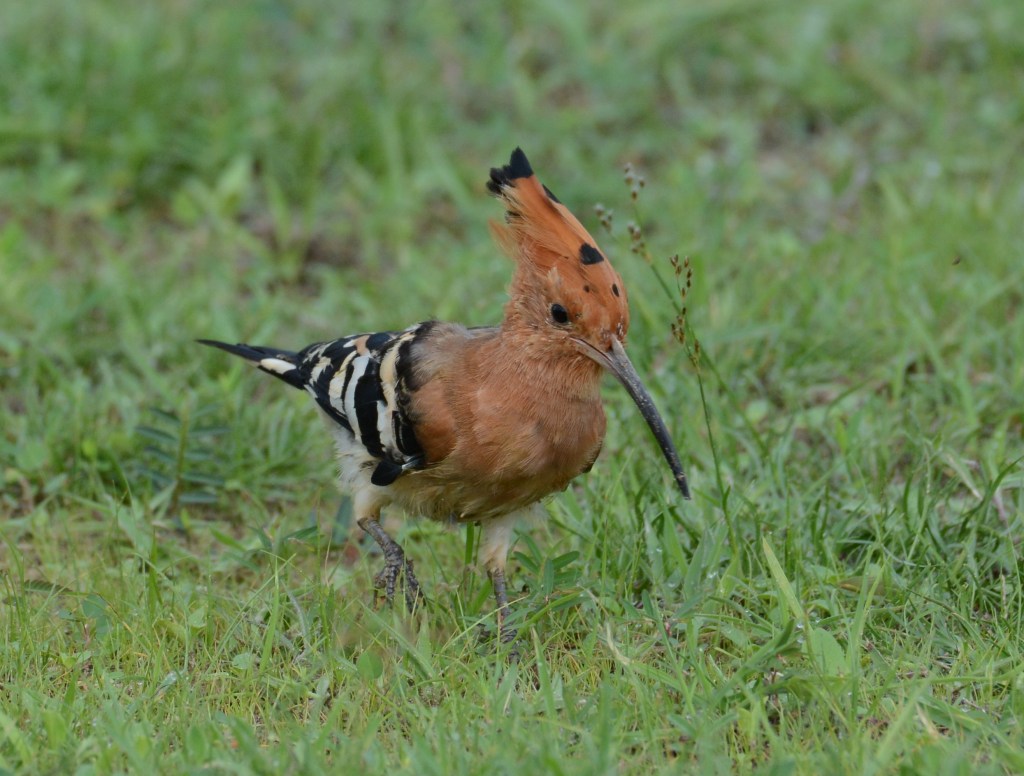
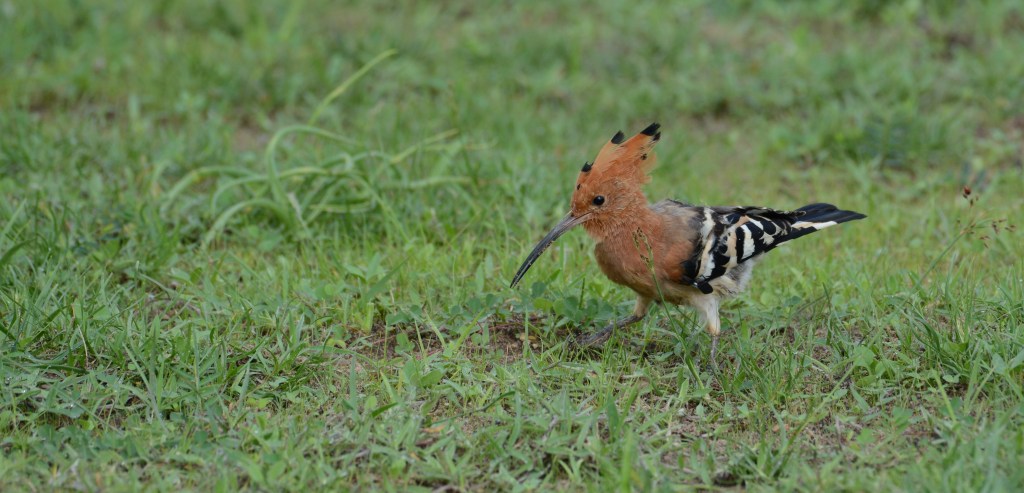
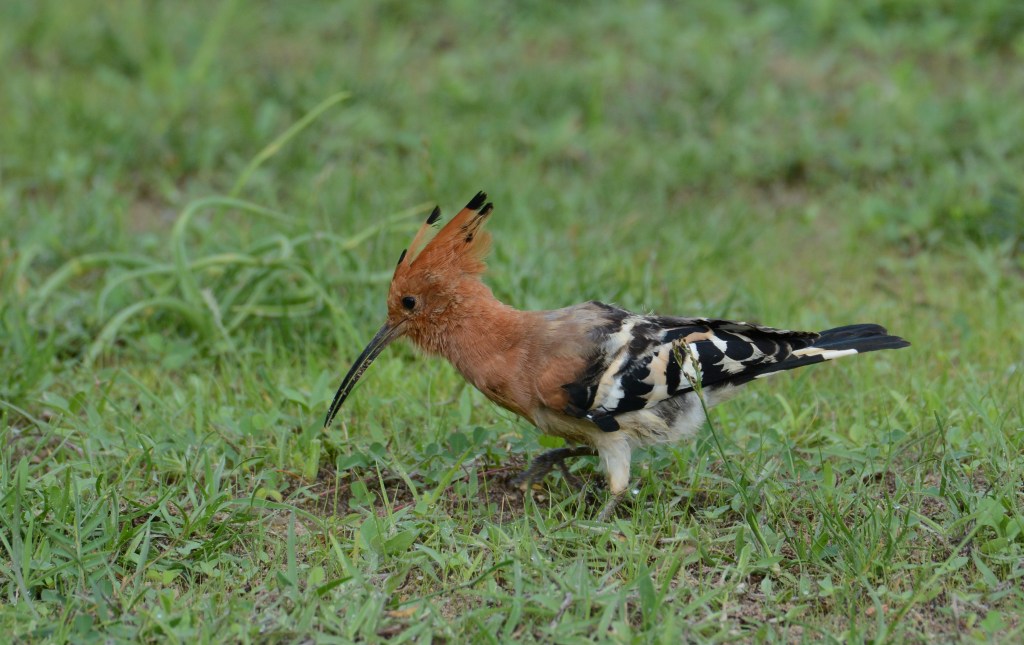
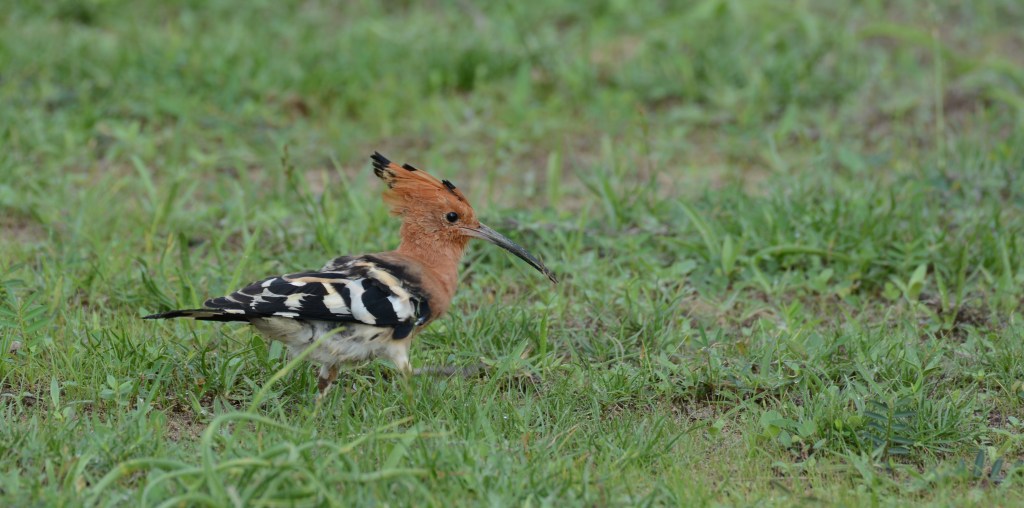
An unmistakable species of avifauna embellished with crest feathers resembling an Indian head dress, with spike-like tips found towering over, or forming a cluster of rear-facing feathers – the tall crest can be erect above the crown or horizontally placed tipping towards the rear parts. The wings are banded in a mix of black and white, like a mosaic of multi-shaped piano keys that converge into a tapering end. The tail feathers are brilliant black, while chin to breast and crest to nape, the Eurasian hoopoe is colored in an orange-ochre-like cinnamon brown.
The Eurasian Hoopoe has an undulating form of movement in air, in sequences of forward thrusts, resembling propulsions in aerial motion. The Eurasian hoopoe is medium built, but the subspecies found in Sri Lanka – Upupa epops ceylonensis – is marginally smaller and has a trademark rufous color to its upper anterior parts with no bands of white in its tall spectacular crest.
This majestic species of bird can be found in small meadows, lawns, and partially-cleared areas, protruding its long tapering beak, probing for miniature grub. Especially biomes such as savannahs and lush grasslands have their own populations of this crested wonder. As a trophy of evolution, the strong head muscles of the bird, allows for the beak to be pushed apart even in subterranean hideouts, to facilitate the discovery of tiny worms hiding below.
The female of the species lays eight or less eggs (clutch size) in a pre-existing cavity on a vertical medium (trees, mountains etc), which have been observed to hatch indiscriminately. The eggs hatch at different intervals due to incubation commencing with the very first egg, during which the male feeds the brooding female.
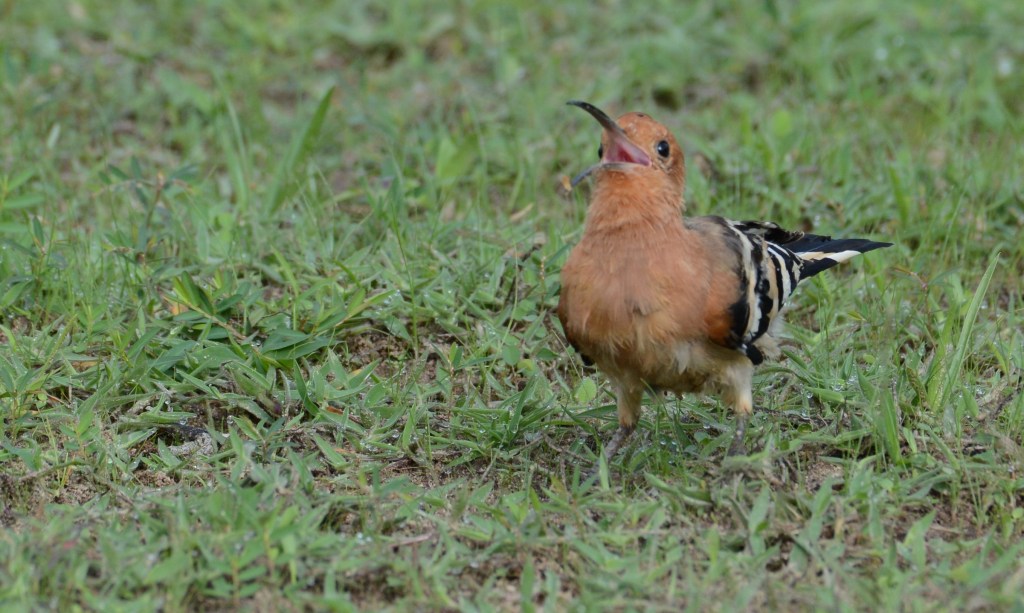
The characteristic sound of the crested beauty can be a “hoopoopoo”, a delicate and subdued articulation that earmarks its characteristic call. A pair of Eurasian Hoopoes are monogamous but this can be a seasonal or a territorial occurrence. There is some degree of competition and fighting between males to be victorious in nesting rights as a pair.
Source: E-Bird and Wikipedia
 Perched Poems: Avifauna in Sri Lanka