



Scientific Name: Esacus recurvirostris
IUCN Status: Near Threatened
Alternate Names: The Great Stone-curlew
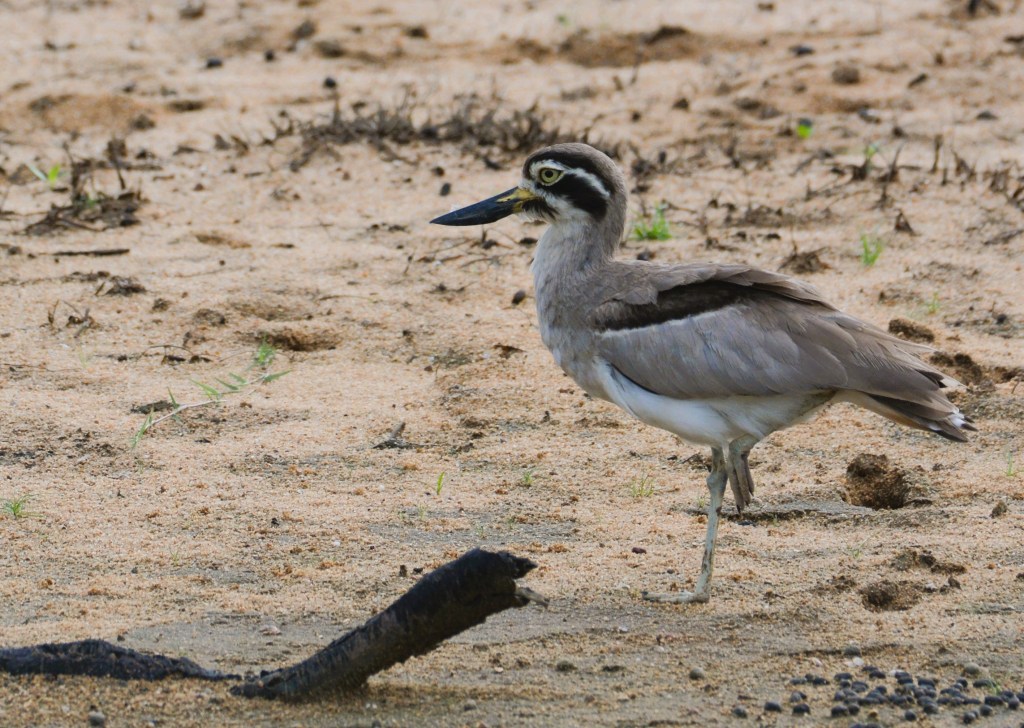
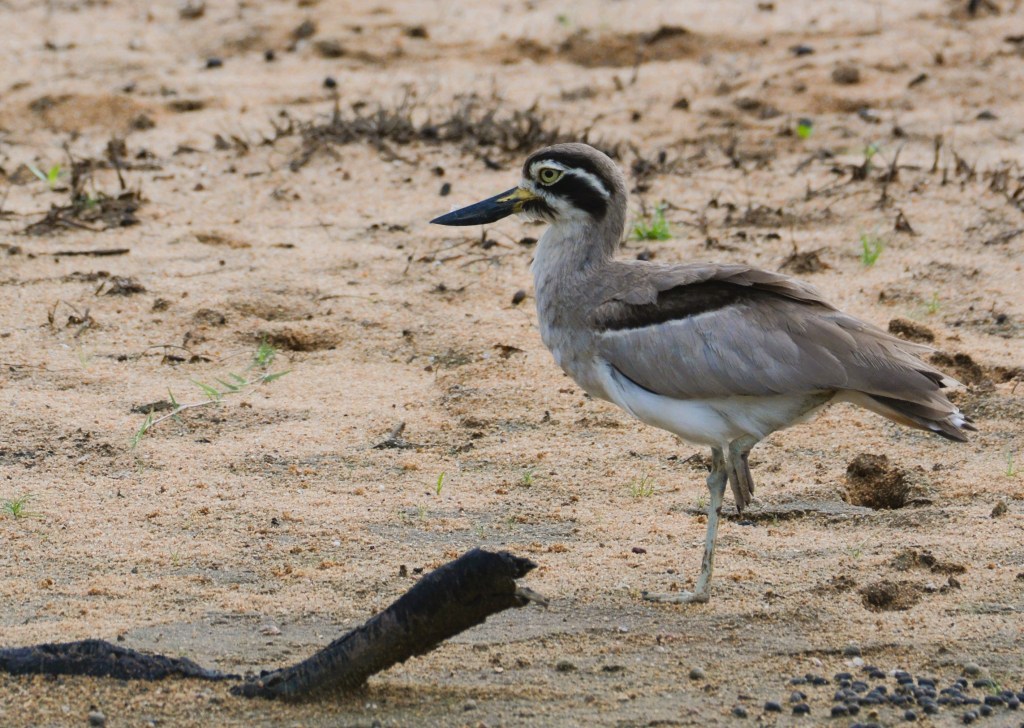
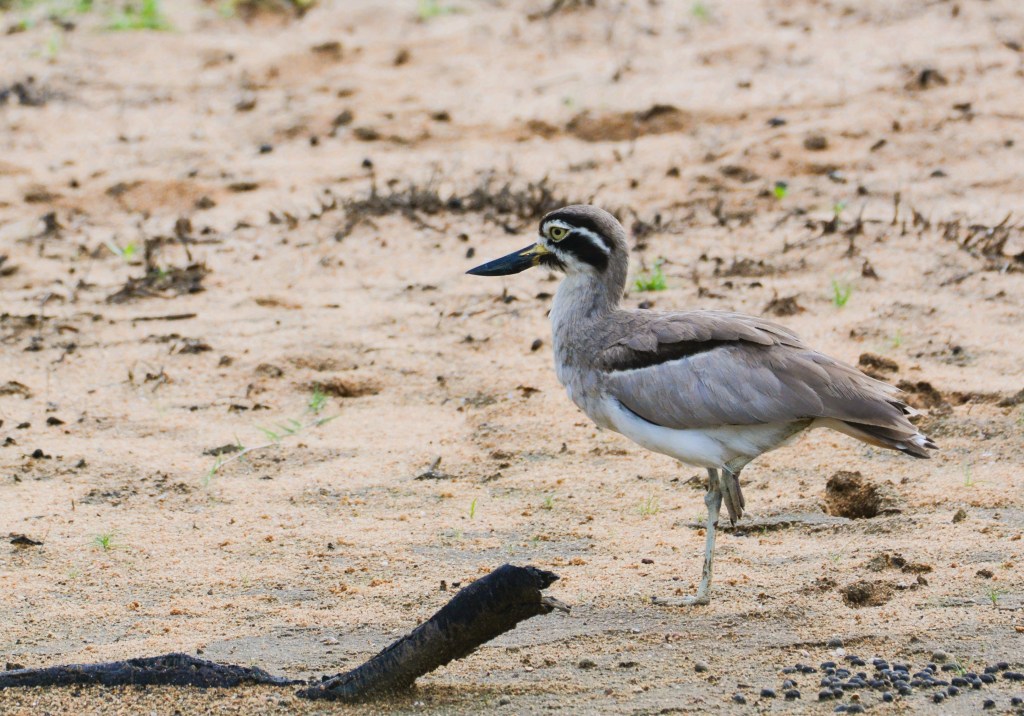
A unique wader with a centerpiece eye – the eye ring in a creamy yellow tone – and a bulky beak, found in the Indian subcontinent, Sri Lanka and in sparse populations in South East Asia. This rather shy flushing-prone bird – which can be seen holding its gaze on one knee (sort of a stare) – is mostly recorded from river estuaries and sandy or rock covered embankments or shores.
This species is monotypic, with no subspecies recorded this far. The upper parts of this inimitable wader is grey, the underparts white, and the large beak harboring a yellow base and a jet-black color in its more distal parts. The sexes are known to be similar in appearance. Other features include a white band as the supercilium and the head area mostly covered by a black mask.
The bird is known to be nocturnal or crepuscular, which is a feature of all Curlews, but has been observed foraging during the daylight hours, in measured steps or in short sprints. The call of this uncharacteristic bird is a whistle that tends to attenuate to time. The Great Thick-knee is known to have a diet of crabs, insects and other prey.
Source: E-Bird and Wikipedia
 Perched Poems: Avifauna in Sri Lanka