
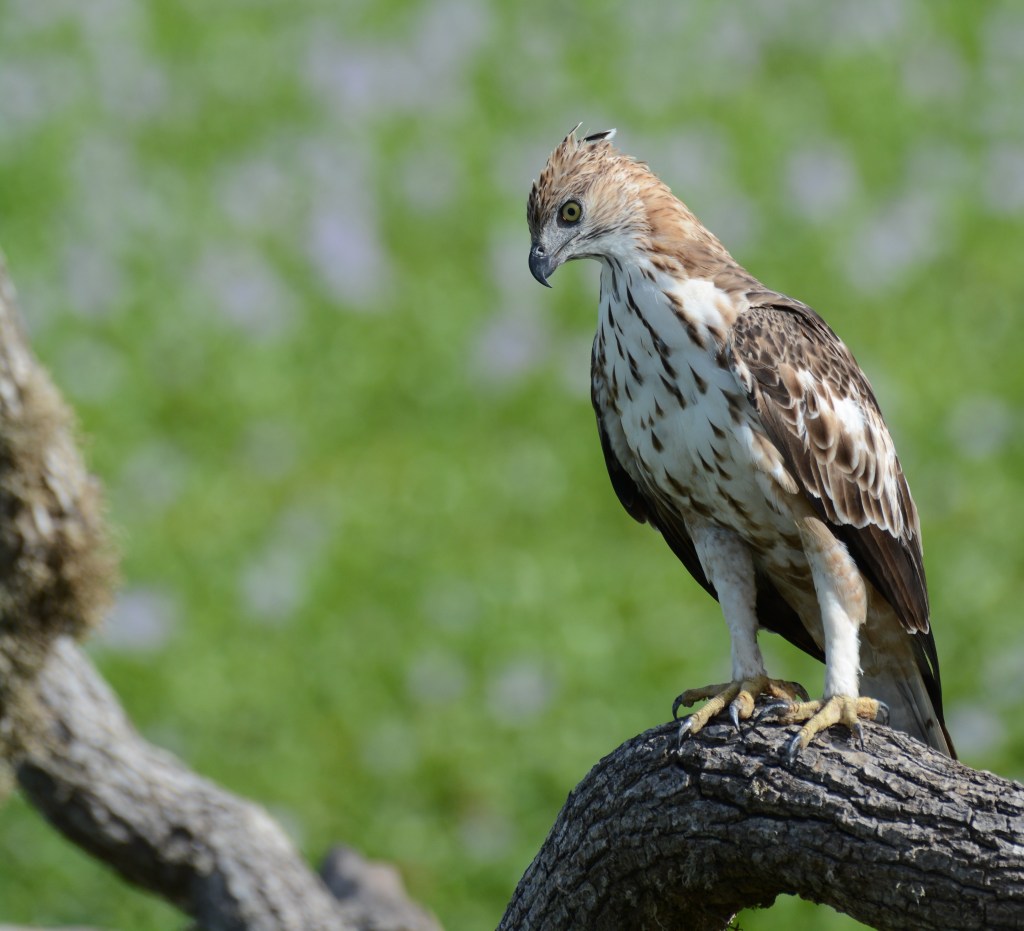
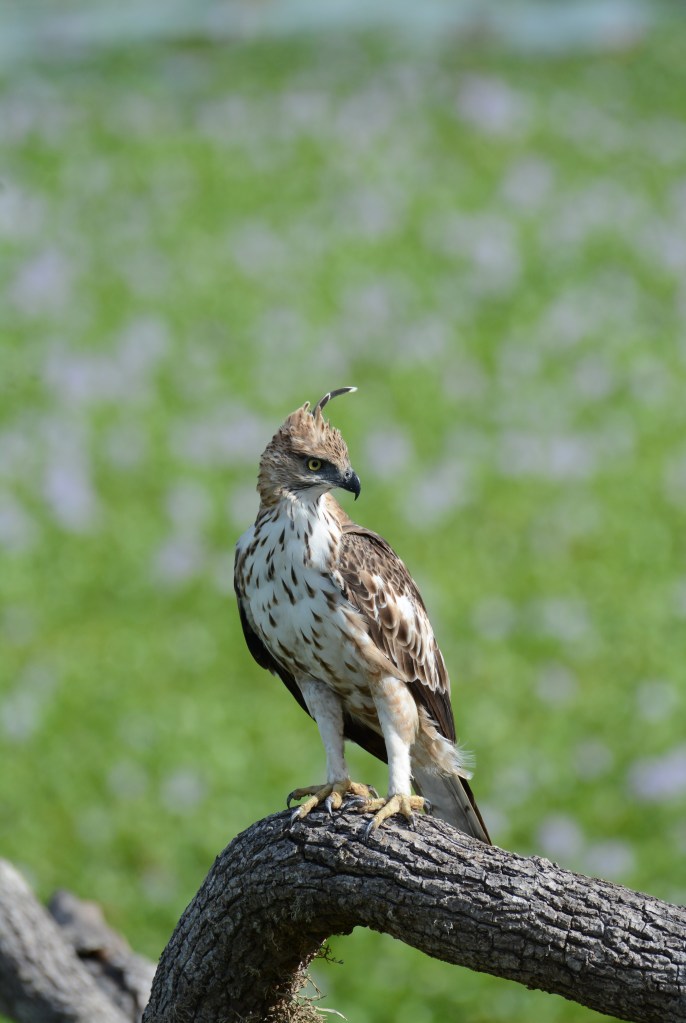
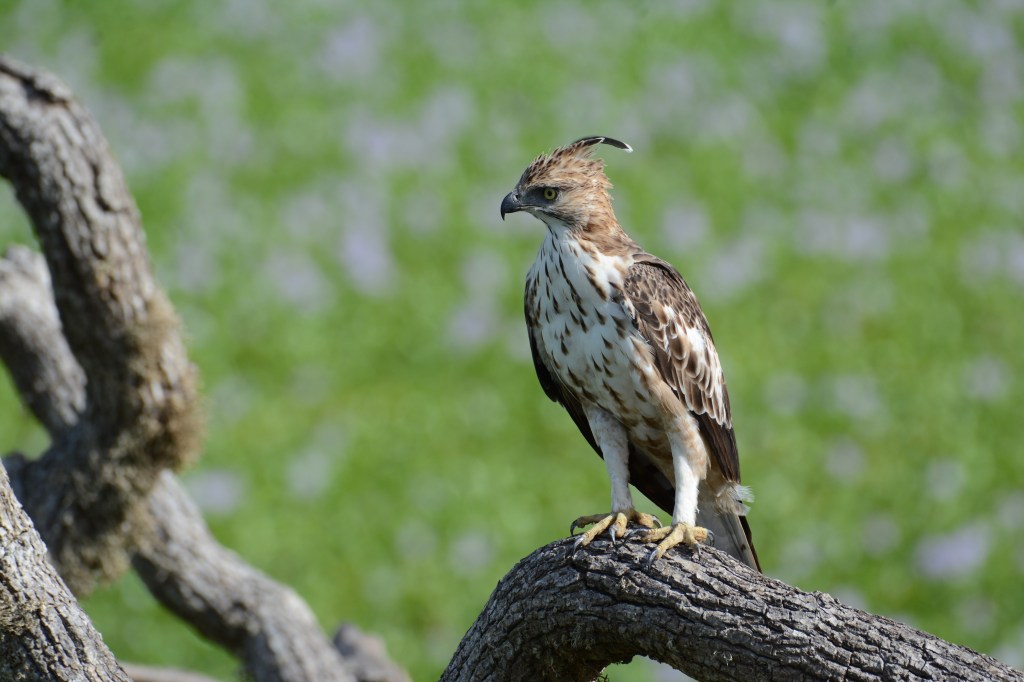
Scientific Name: Nisaetus cirrhatus
IUCN Status: Least Concern
Other Names: Crested hawk-eagle
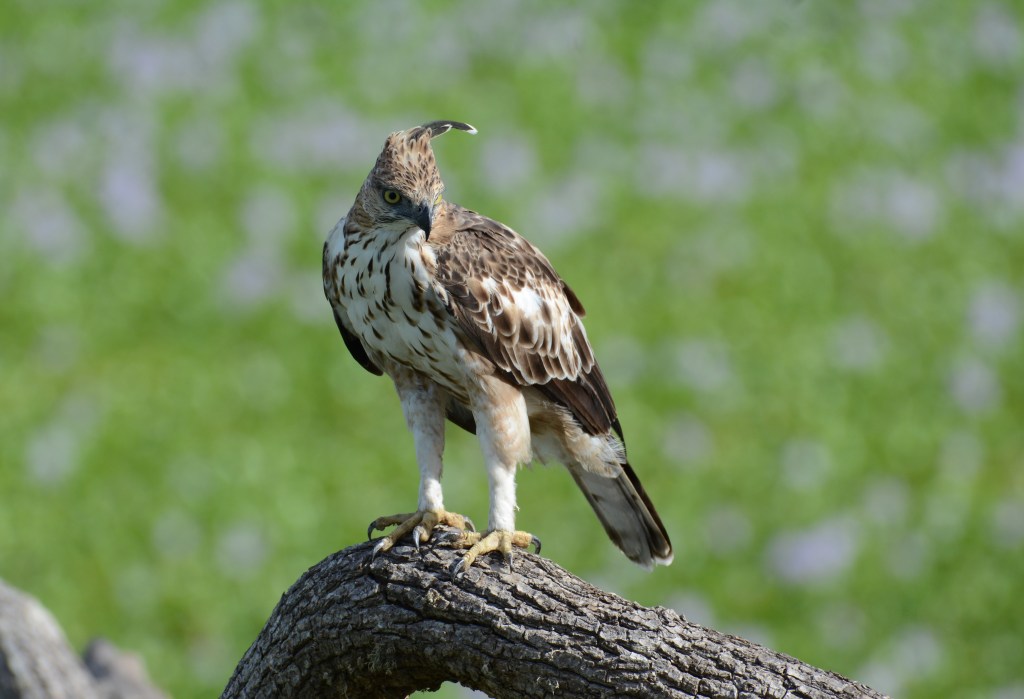
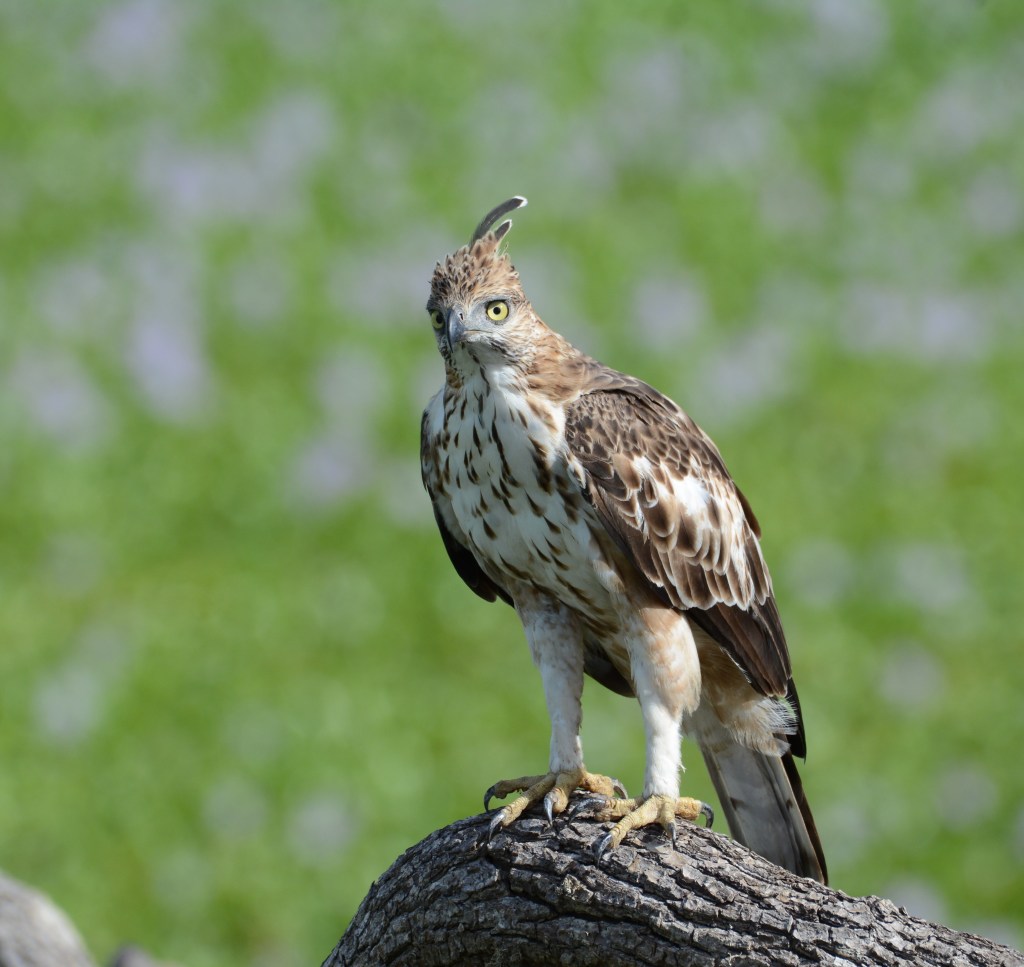
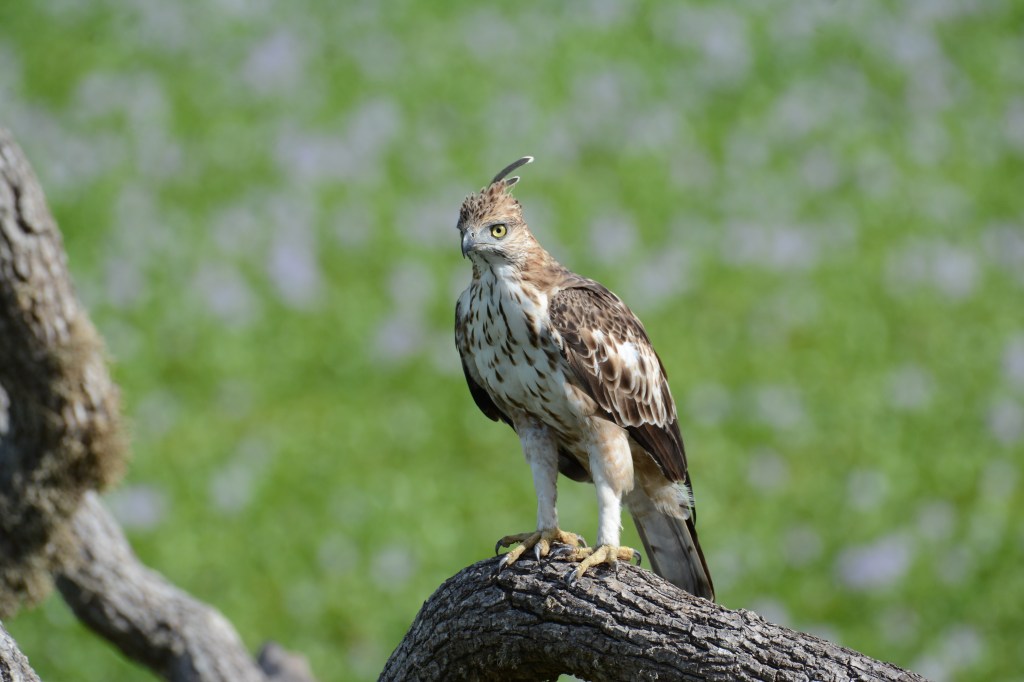
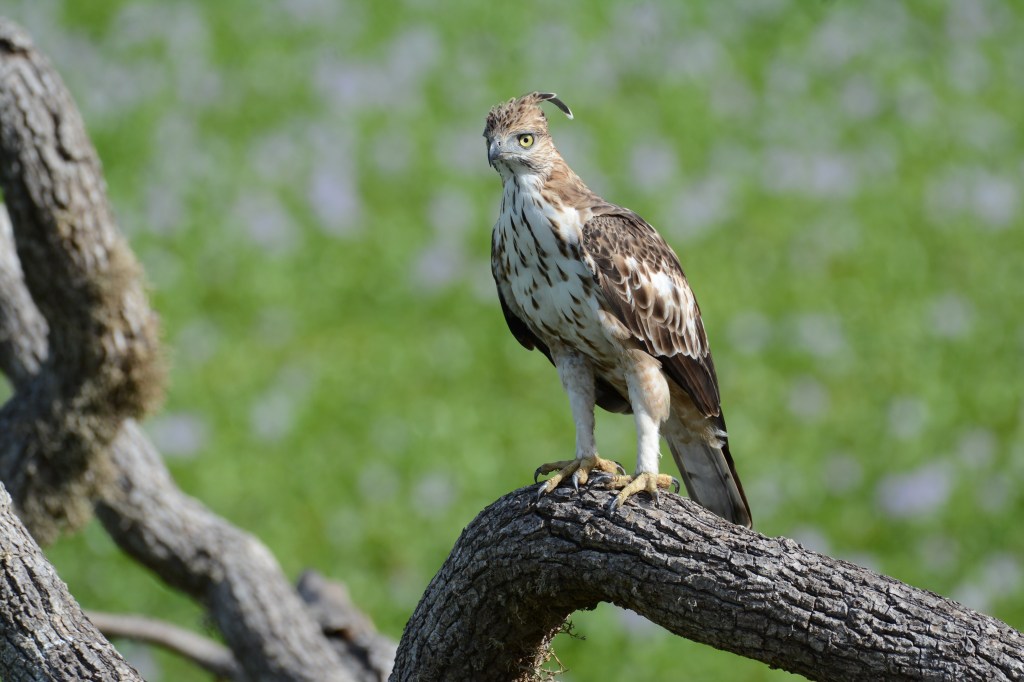
A middle-sized raptor of the genus Nisaetus, with brown upper parts and streaks in under parts (tawny), a highly variable floppy crest, stumpy wings, and feathered legs, known to perch upright in seclusion and in open areas sparse in vegetation. Adults of the species have yellow to orange eyes while the juvenile birds are earmarked by paler eye colors.
The spectrum of prey of this species spans birds, mammals and reptiles, but showcases a slight preference for avifauna over other types of prey. The birds of this species, are found in dense woods and in open land formations, with flight typifying a forest dwelling species of raptor, with greater lengths in tail and powerful legs for a rich blend of strength and movement, epitomized by quick strike times in canopy-rich forest vegetation.
A high-pitched scream is the characteristic call of this raptor species; an otherwise rather-silent raptor that is most vocal in the breeding season. The call expands in loudness as a crescendo that terminates in a loud scream.
The raptor species often mate for life but is solitary except for the breeding seasons. A territorial display is commonplace for both sexes of the species, with exuberant poses such as the tail pointing skywards in flamboyance, and maneuvers such as airlifting and nosediving being part of the mating ritual.
On average, there is one pair of this raptor species for hundreds of kilometers, however it is anticipated that their population density is somewhat higher. The raptor species shows remarkable adaptation to human encroachment marked by a steady population even in anthropogenically-vibrant human habitats.
The raptor species is resident in South and South East Asia, and is found in Sumatra and the Andaman Islands, even dwelling in altitudes of up to 2200m, such as in the foothills of Sri Lanka.
The following subspecies personify the diverse evolutionary fates of this raptor species.
- N. c. limnaeetus – (Horsfield, 1821)
- N. c. cirrhatus – (Gmelin, JF, 1788)
- N. c. ceylanensis – (Gmelin, JF, 1788)
- N. c. andamanensis – (Tytler, 1865)
- N. c. vanheurni – (Junge, 1936)
N. c. ceylanensis is endemic to Sri Lanka, and is known to possess a longer crest, while being monomorphic and less embellished in streaks than the nominate species.
Source: Wikipedia
 Perched Poems: Avifauna in Sri Lanka