
Scientific Name: Sitta frontalis
IUCN Status: Least Concern
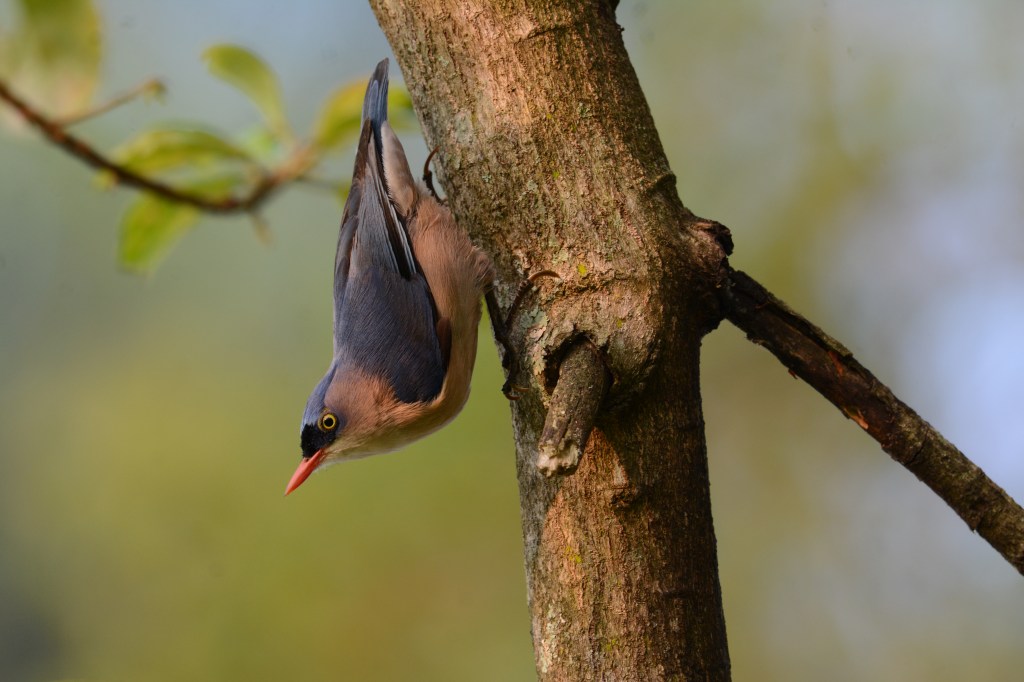
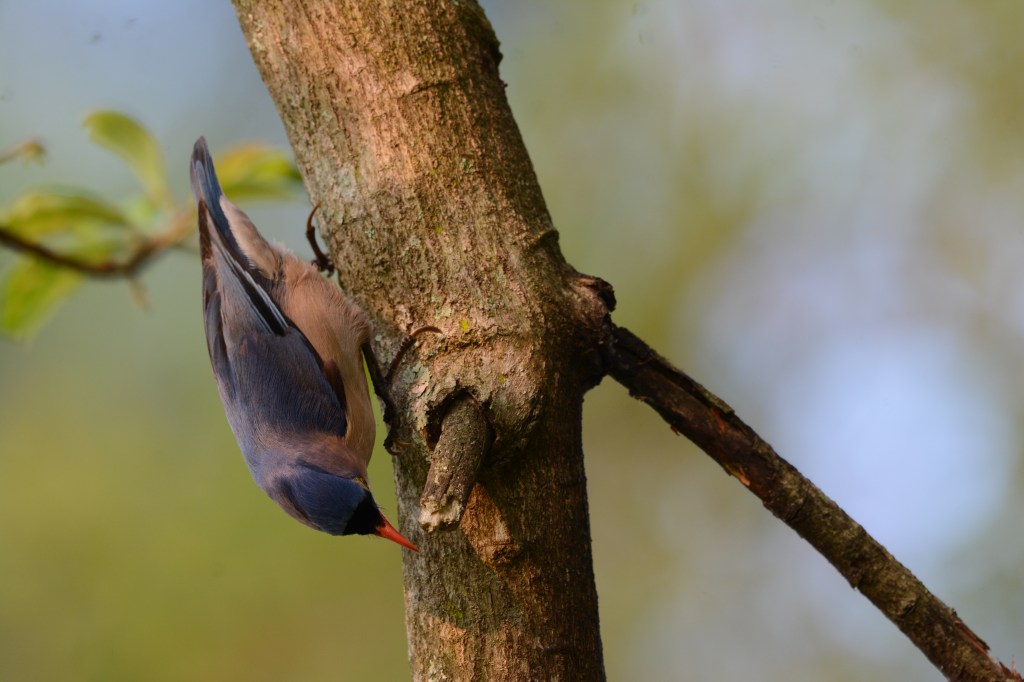
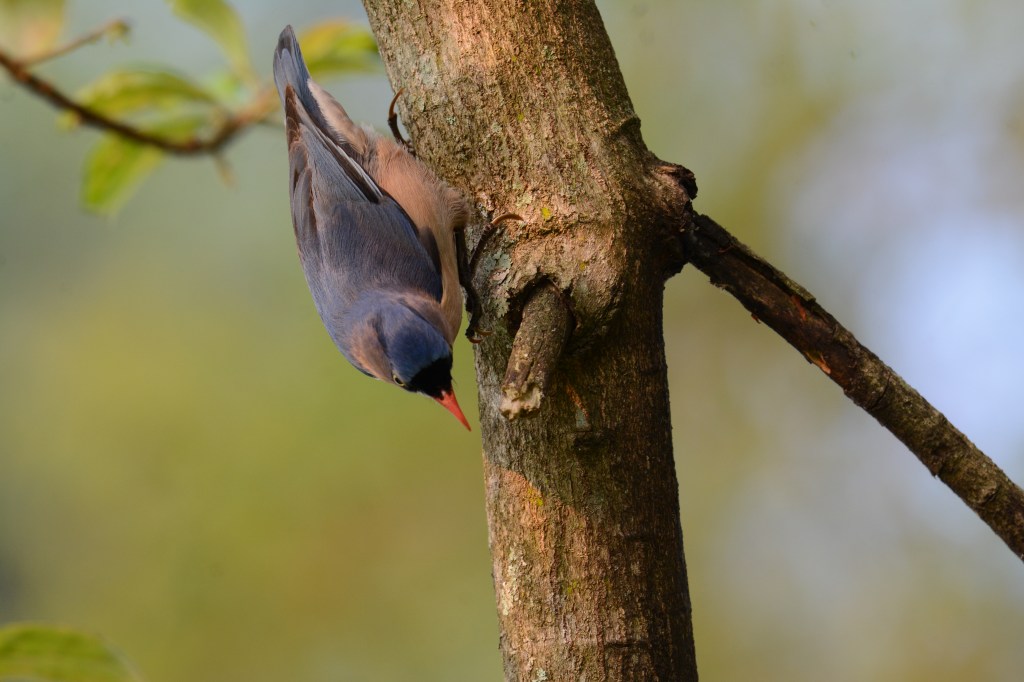
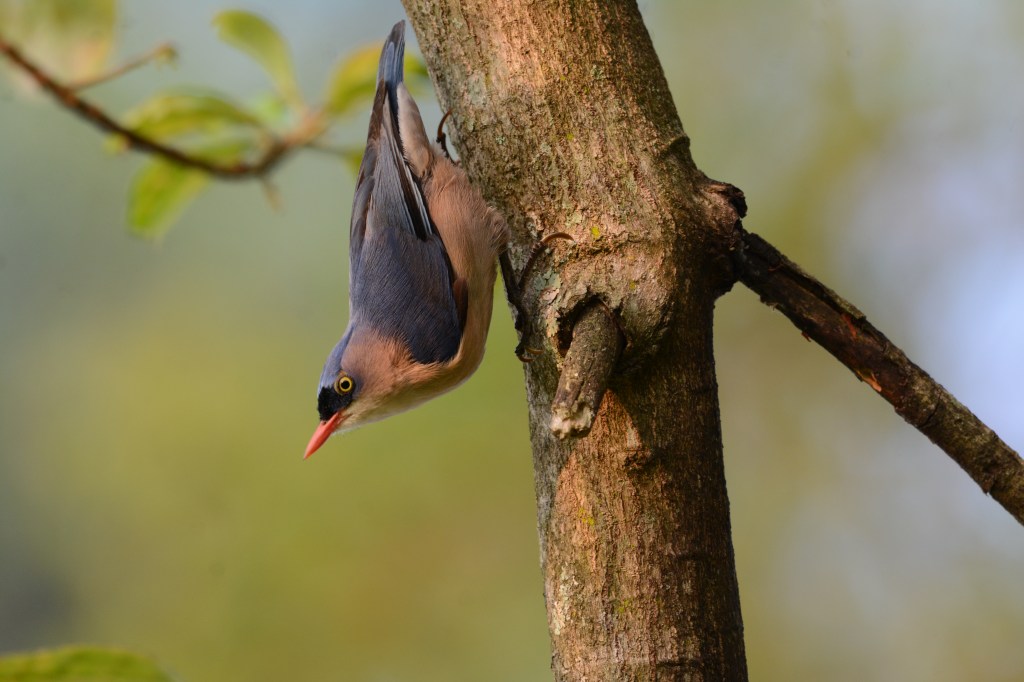
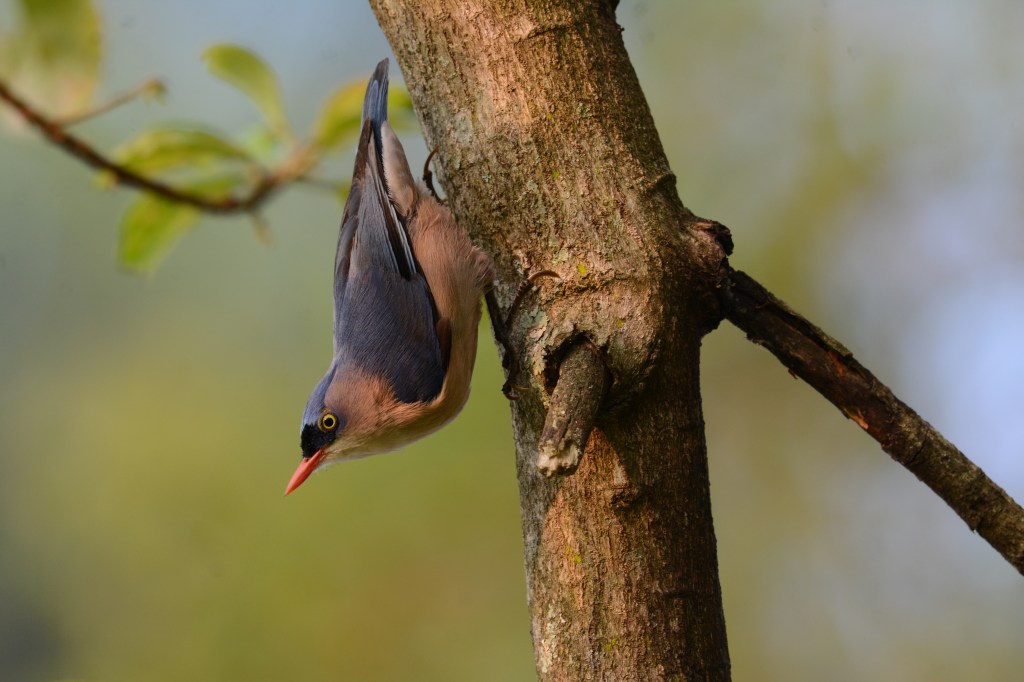
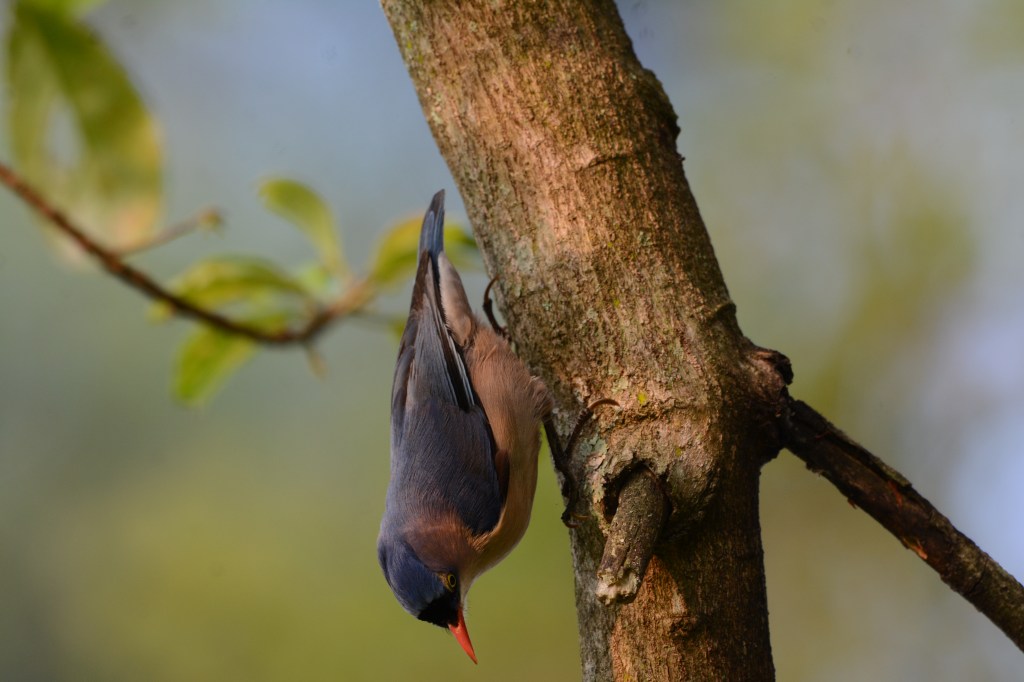
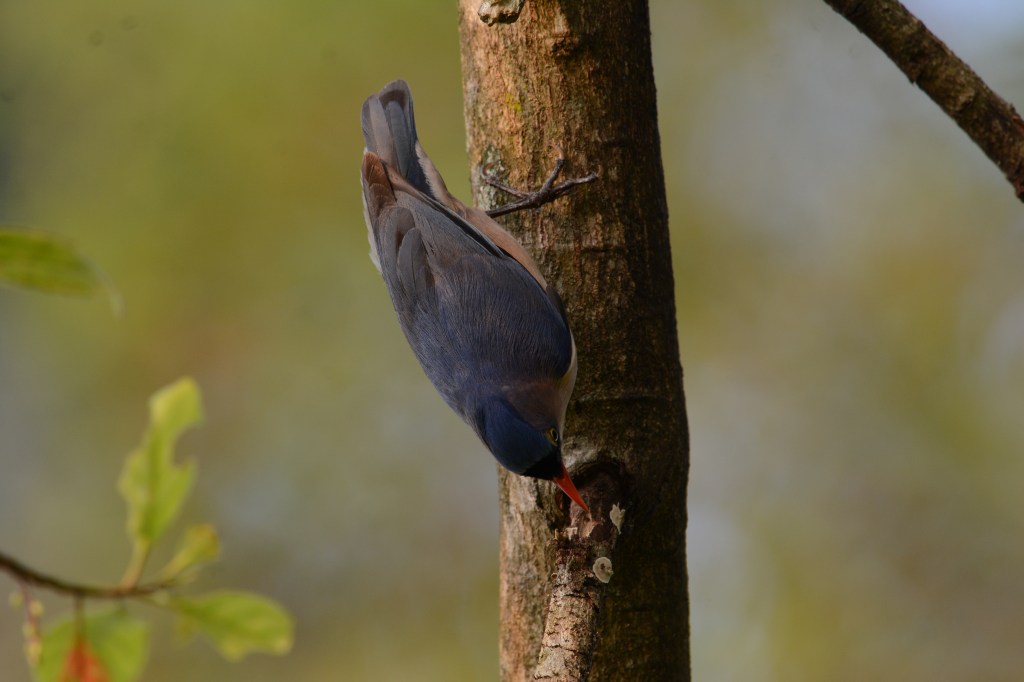
A species of passerine bird that is distinct from the neutral shades of the larger family of nuthatches, with brilliant blue upper parts, a bright crimson beak and a black patch between the eye and the beak. The chin and throat of this colorful heartthrob species is whitish in tone. While the male has a superciliary stripe above the eye pointing backwards, the female of the nuthatch species lacks this black line on the supercilium.
The bird is known to hunt for insects and spiders along the barks of trees, and they are known to forage even upside down. The clawed feet are capable of strong traction, while also possessing a strong beak and a characteristic short tail that is common to all nuthatches. The primary habitats of the Velvet-fronted Nuthatch are the lowland forests and the evergreen forest foothills. They are known to travel as groups with mixed member groups a common occurrence.
The range of the species is documented to be from western India to the islands of the Philippines and Indonesia. They are known to breed in hollow enclosures built by woodpeckers and barbets. The Velvet-fronted Nuthatch has been documented to carry moss, feathers and grass to make a cushioned pad inside the hollow cavities that they build their nests in. This particular Nuthatch species is also known to use mud to narrow the entrance of the cavity, to make it smaller, as means to provide additional protection. The female is known to hatch the eggs but brooding is performed by both the female and the male of this species of bird.
The call of the Velvet-fronted Nuthatch is known to be loud, with a repetitive trill, that can be heard with low to high vocalization. A call that goes “chit-chit-chit” in multiple repetitions of 3-5 seconds, with gaps in between.
S. f. frontalis Swainson is the designated subspecies in Sri Lanka. There has been confusion in the history of taxonomy of this species, but is now documented to be divided into five populations, each one being a subspecies.
Source: E-Bird and Wikipedia.
 Perched Poems: Avifauna in Sri Lanka