

Scientific Name: Anas poecilorhyncha
IUCN Status: Least Concern
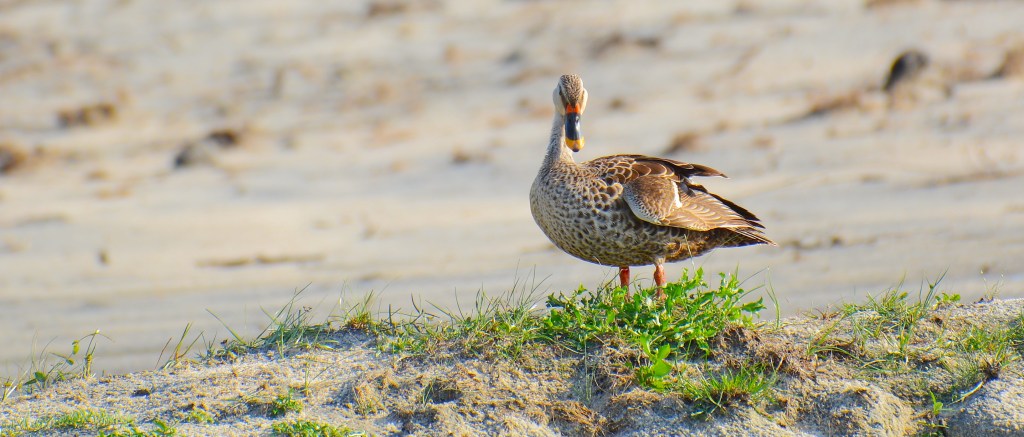
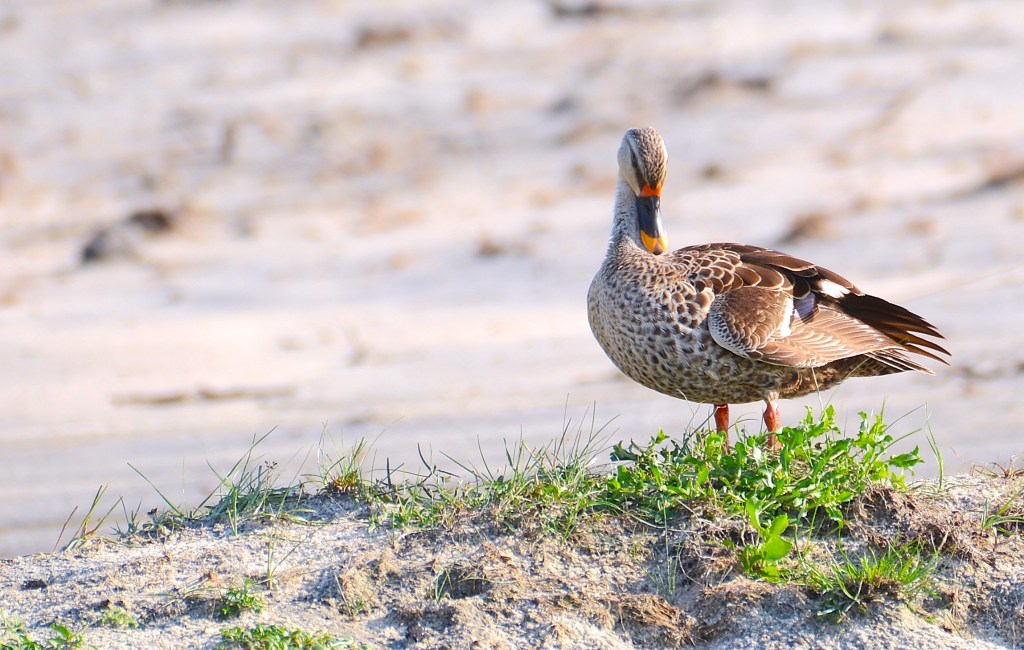
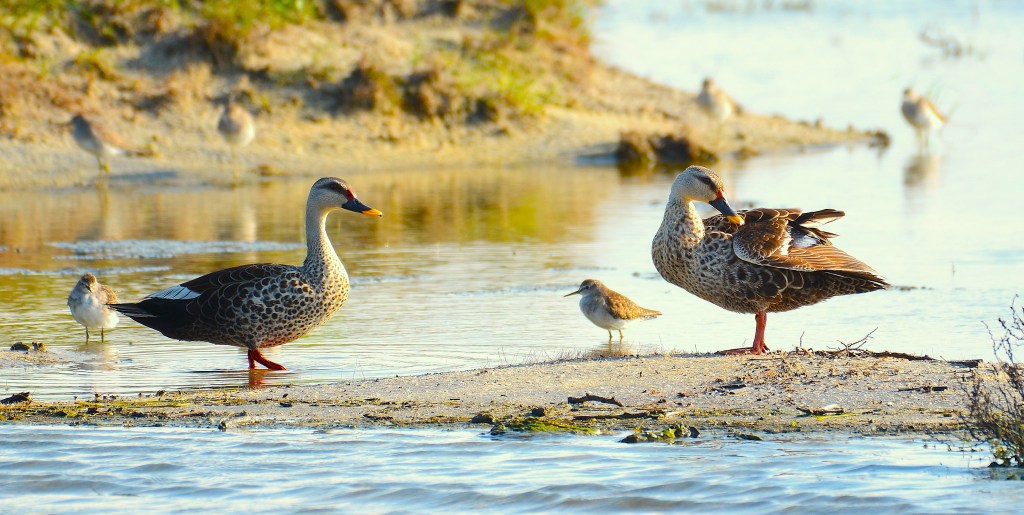
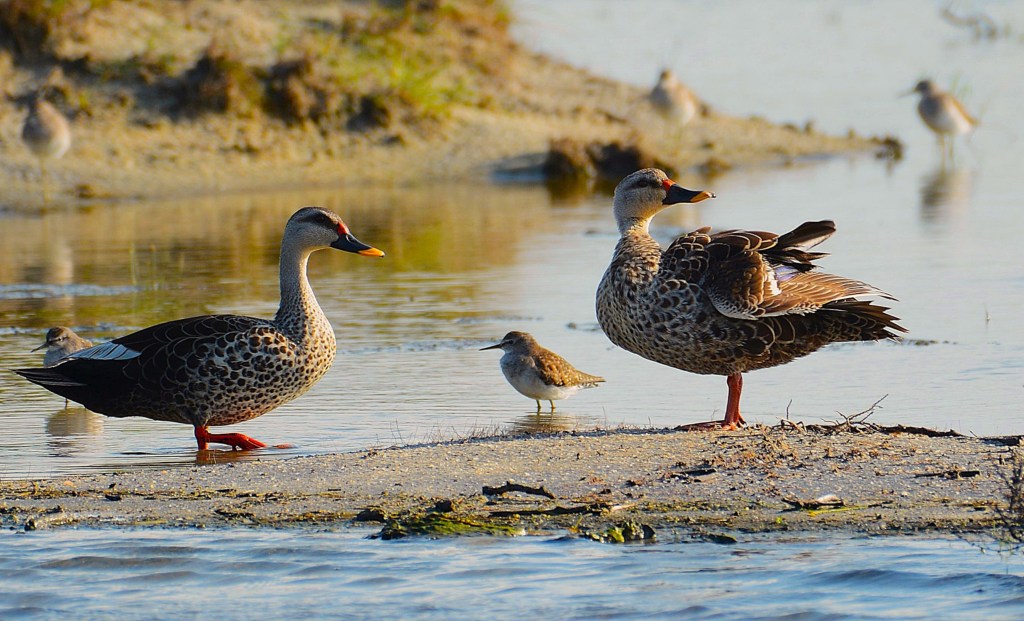
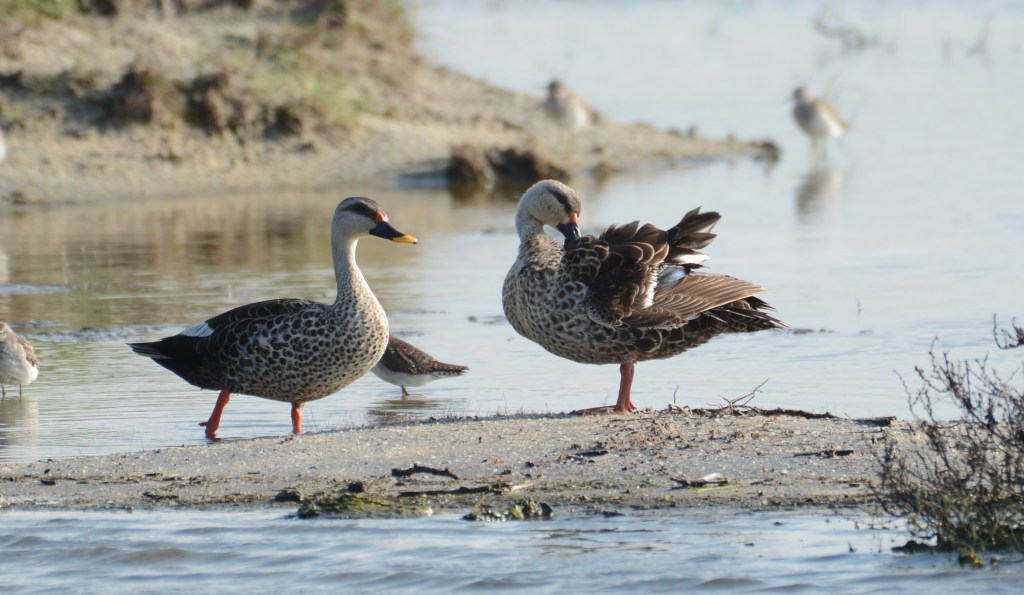
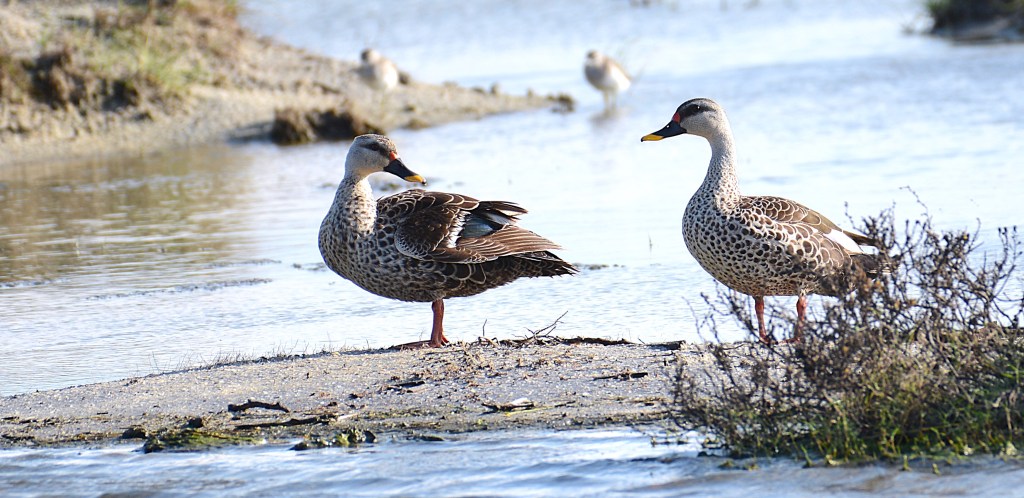
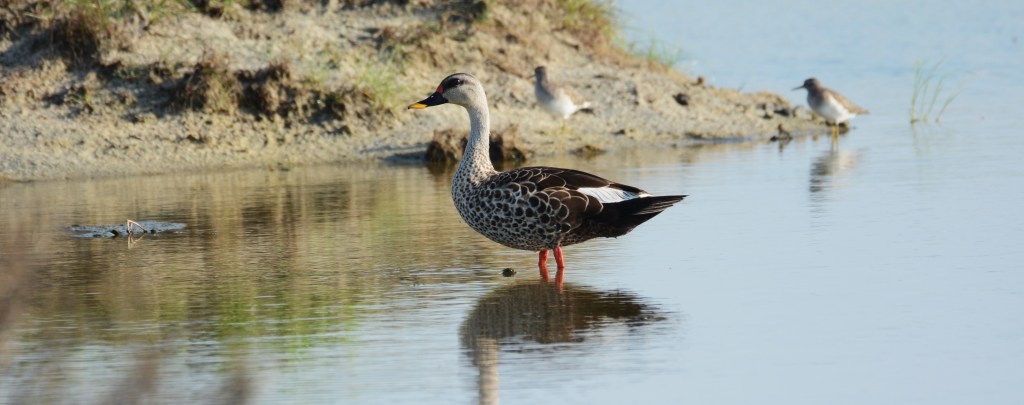
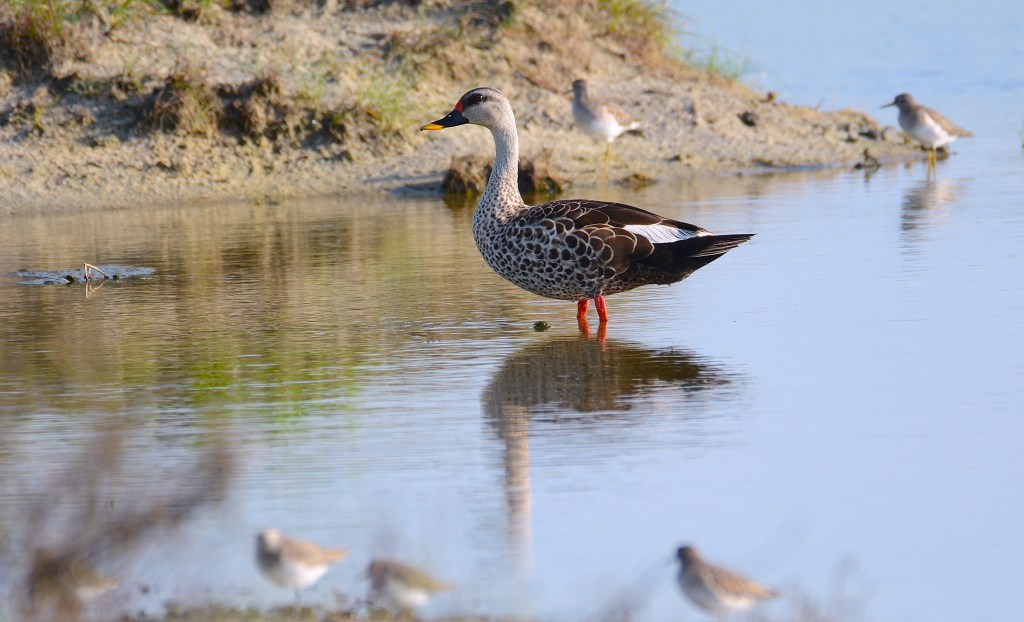
A species of duck with a warm brown coloration all over, with the tip of its black beak painted in a bright pineapple yellow and a “double-decker bus” red spot at the base of its bill provisioning the common name – Indian Spot-Billed Duck. Attributed as “Least Concern” in IUCN classification, these dabbling ducks can be seen swimming in shallow water and walking on cultivated land, marshes and freshwater wetlands. The range of the Indian Spot-Billed Duck extends from India to South East Asia while pockets of this species can be found in North Western Parts of Sri Lanka, especially in the district of Mannar. A portmanteau of poikilos meaning “pied” or “spotted” appended to rhunkhos stating a “bill” forms the etymology of the Indian Spot-Billed Duck’s species name.
The Indian Spot-Billed Duck has the following body dimensions – 55–63 cm (22–25 in) in length and 83–95 cm (33–37 in) from tip to tip of wings, with a body mass of 790–1,500 g (1.74–3.31 lb). The reproductive biology of the Indian Spot-Billed Duck entails a clutch of 8-14 eggs shrouded from plain sight on areas of ground bordering wetlands, while nests on trees have also been documented. The breeding season of this rather charismatic species of duck spans from November to December in Southern India. The call of the Indian Spot-Billed Duck draws similarities to the mallard. The Indian Spot-Billed Duck prefers isolation from other duck species and forages on grains such as rice and smaller snail species. Trematodes are known to infect the Indian Spot-Billed Duck, with species such as Echinoparyphium bagulai being common pathogenic parasites.
History recounts that the gregarious Indian Spot-Billed Duck was hunted in abundance in India, as it was known for its mouthwatering culinary features on the human palate. Two subspecies have been identified of the colorful species of duck.
- A. p. poecilorhyncha Forster – India and Sri Lanka
- A. p. haringtoni – Myanmar to southern parts of China and South East Asia
Sources: E-Bird and iNaturalist
 Perched Poems: Avifauna in Sri Lanka