
Scientific Name: Terpsiphone paradisi
IUCN Status: Least Concern
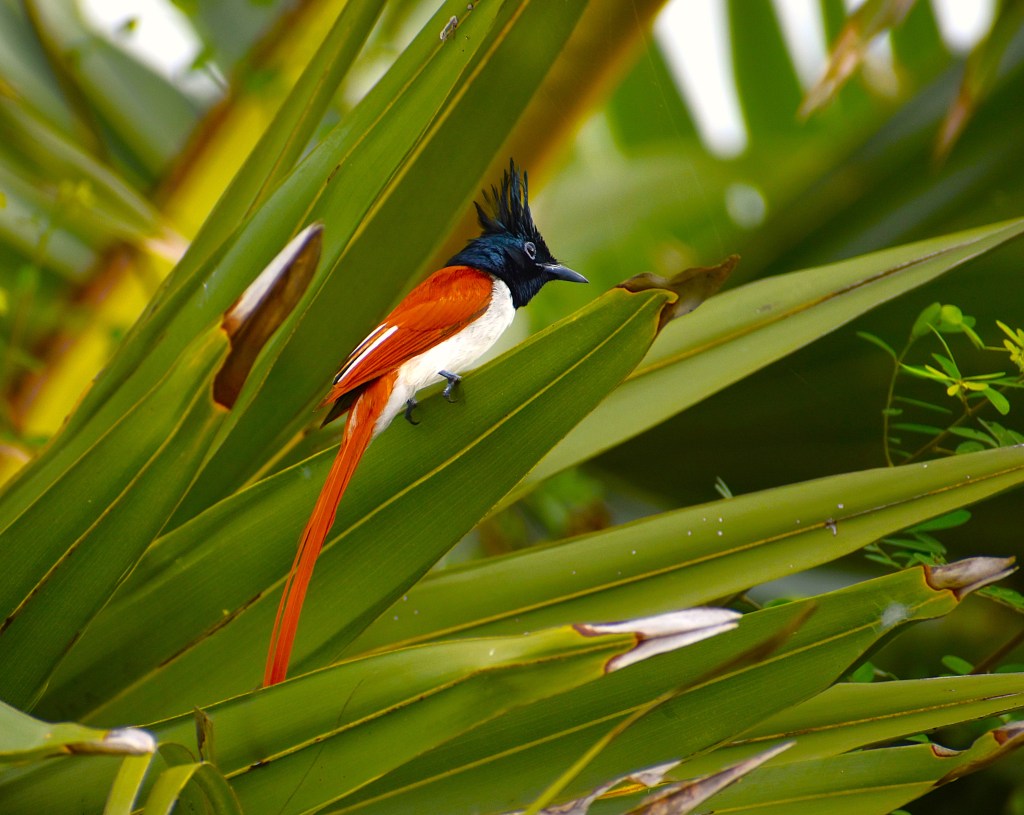
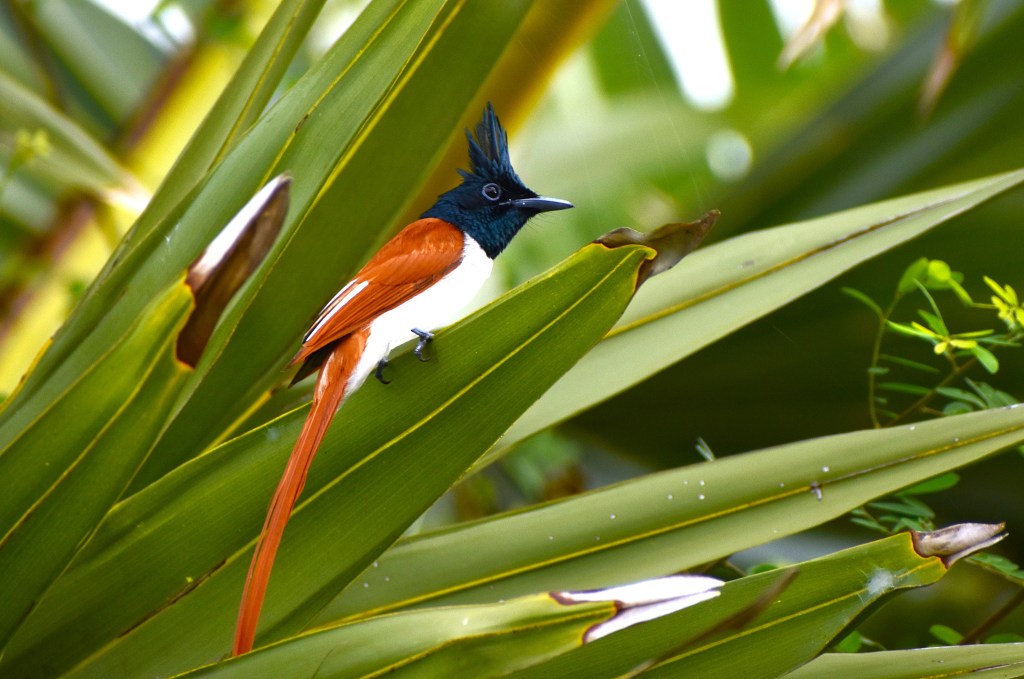
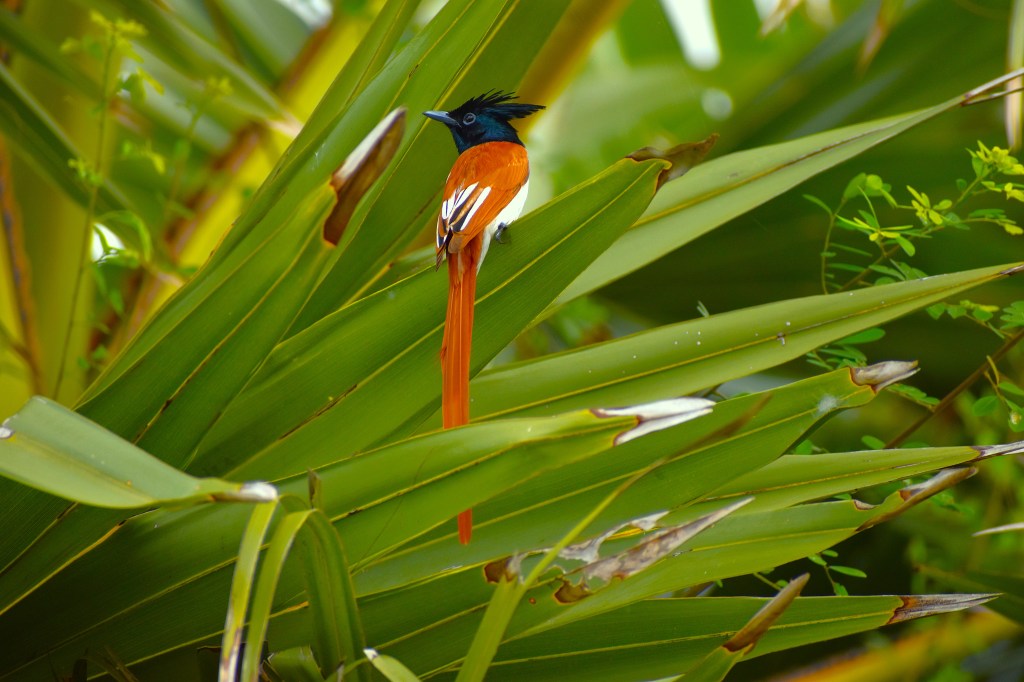
A sight for sore eyes, the elegant and graceful Indian Paradise Flycatcher woos the birdwatching fraternity with a ribbon like tail that can only be found in the male of the species. The male has two colors to its vibrant plumage – pristine white and bright cinnamon – and possesses glossy black head parts and a blue ring around the eye. The females carry a cinnamon tone, lack the long ribbon like tailfeathers and do not possess a blue ring around the eye.
Flycatchers are known for their aerial sallies hunting for insects while also scooting to the ground for the capture of insect grub. The Indian Paradise Flycatcher is found from Kazakhstan all the way to the southern tip of Sri Lanka, in terms of latitudinal range. The Indian Paradise Flycatcher is known to pass the winter in Sri Lanka and is considered a migratory species.
Sri Lanka is home to the resident Sri Lanka Ceylon Paradise Flycatcher (subspecies ceylonensis) and the migratory Asian Paradise Flycatcher (subspecies paradisi), both subspecies are found in low country dry areas but are known to invade other parts in seasonal migrations.
Paradise flycatchers build cup shaped nests, composed of spider webs, plant fibres, tree bark and biological meshes including other fibrous material which they use to build a shallow enclosure. Indian Paradise Flycatchers customarily lay between 2-5 eggs. Socially monogamous, males and females of the species are known to participate in nest-building, brooding and in feeding the young.
Three subspecies are recorded for these flamboyant and visually-elegant avifaunal beauties.
Indian paradise flycatcher (T. p. paradisi)
Himalayan paradise flycatcher (T. p. leucogaster)
Ceylon paradise flycatcher (T. p. ceylonensis)
In colloquial language, the Indian Paradise Flycatcher is known as “siwuru hora” [in Sinhalese], a testimony of its long draped ribbon-like tail that flies about like a stolen robe from a temple, streaked in bright cinnamon or a woody orange. The global population of the Indian Paradise Flycatcher is known to be stable and there are no impending dangers to the populations found in the Indian subcontinent.
From a personal observational point, a pair or the lone male of the Indian Paradise Flycatcher appears every winter to my back garden and perches on nearby branches and opened window panes, making sullies to grab hold of insects while being seemingly unflustered in a meditative state, passing time lazily, either in mid morning or early afternoon.
References: E-bird and Wikipedia.
 Perched Poems: Avifauna in Sri Lanka