
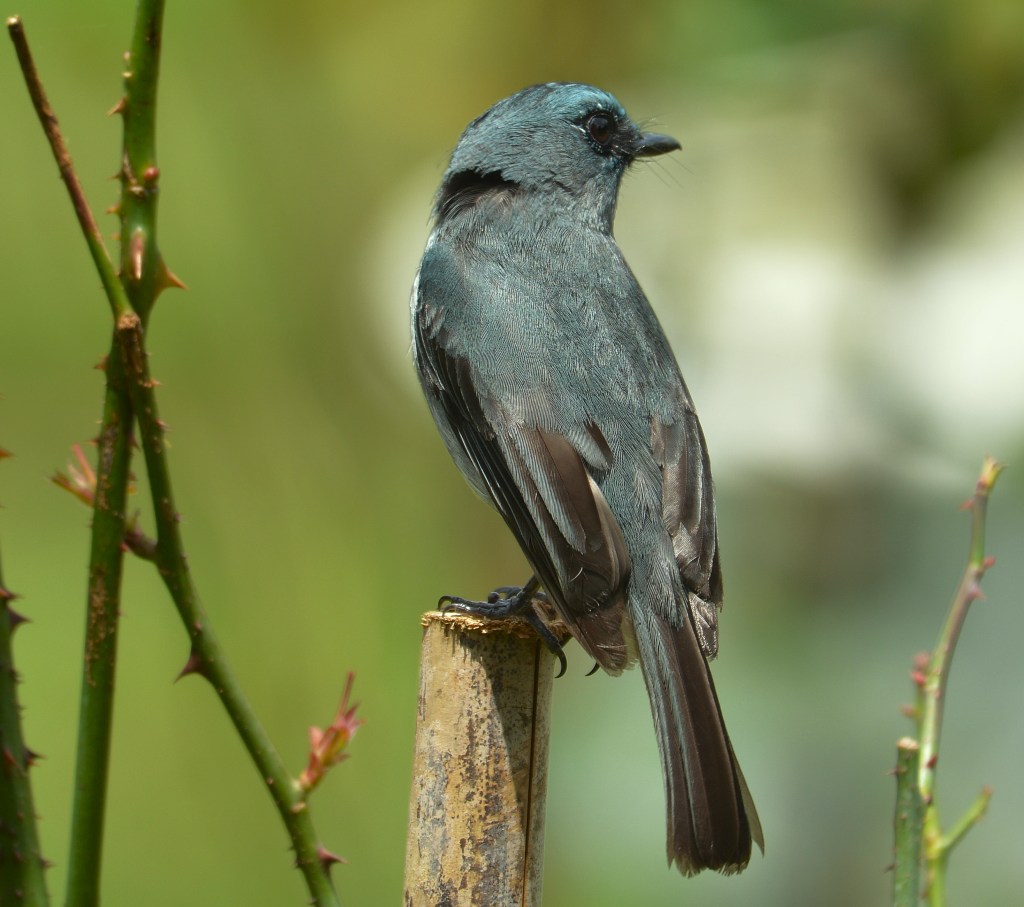
Scientific Name: Eumyias sordidus
IUCN Classification: Near Threatened
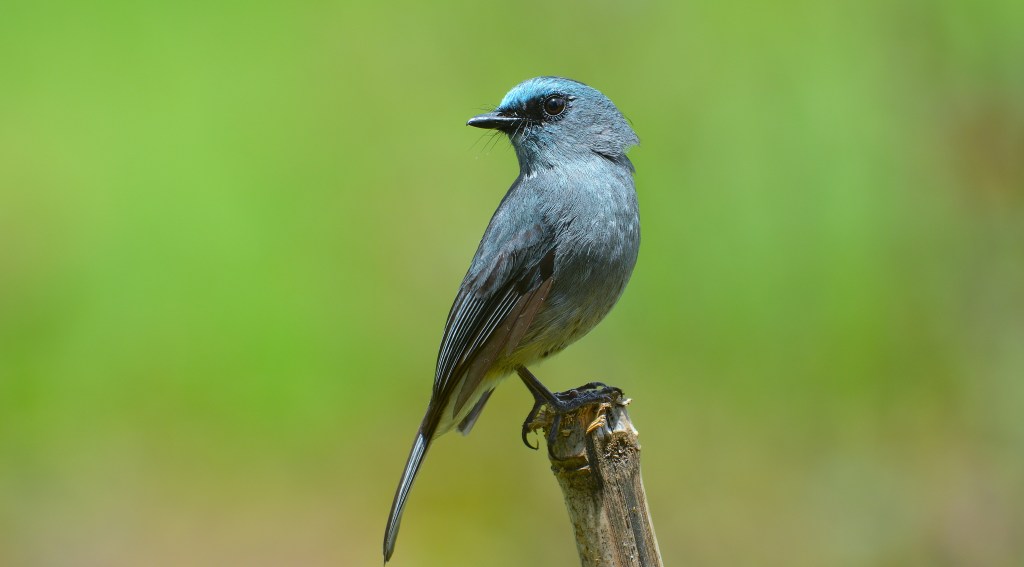
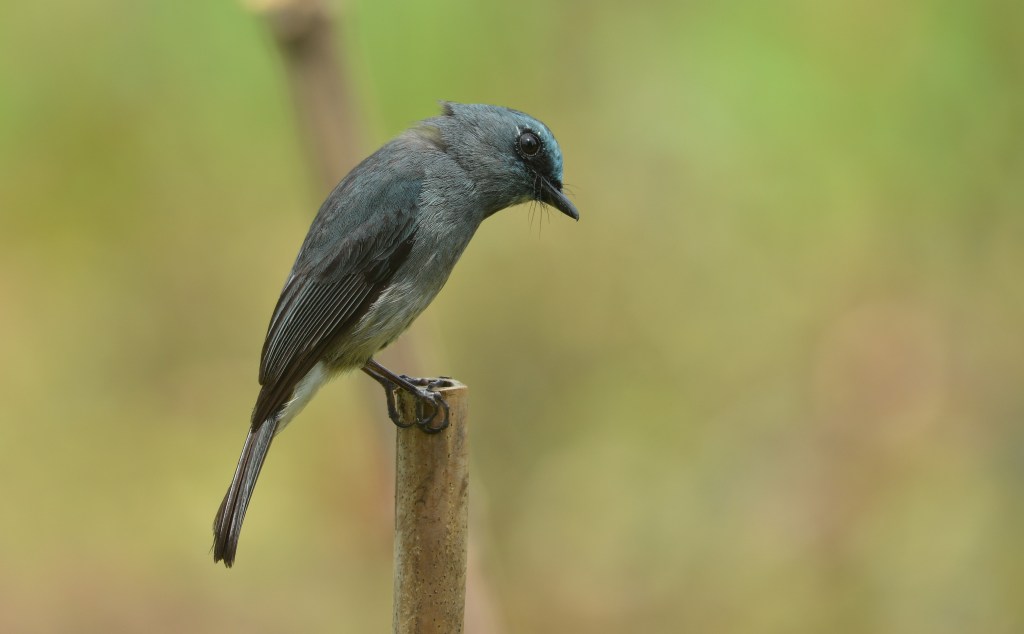
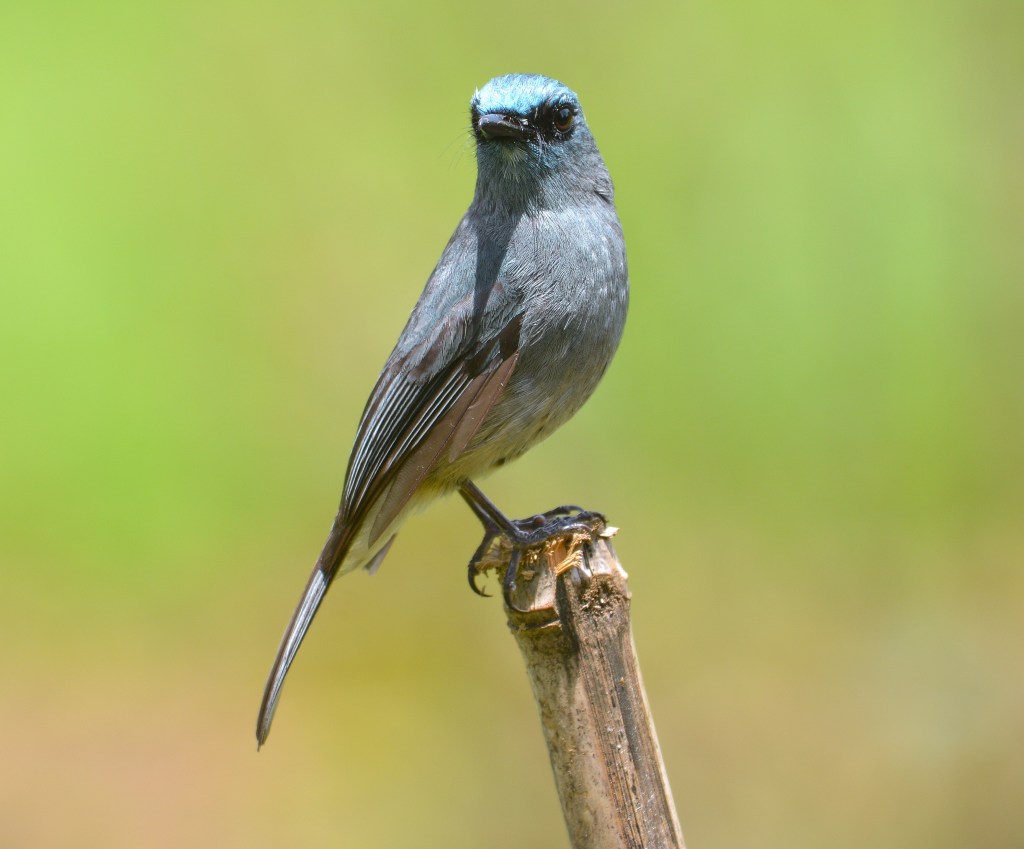
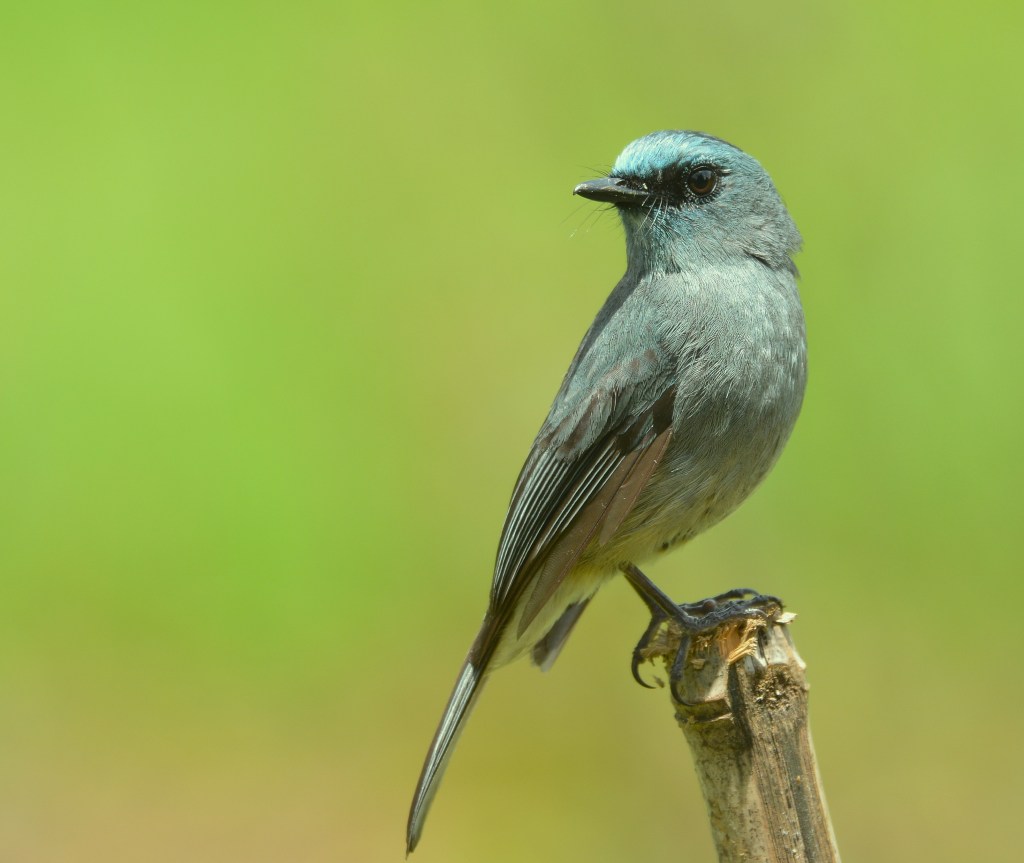
A dull blue all-over cloak of feathers with a vibrant blue forehead and a largely black face characterizes this endemic bird species that can be occasionally encountered by our visual faculties, in hilly areas of Sri Lanka, primarily in dew-saturated montane forests. An upper attitude of 1830 meters and a lower base of 1220 meters forms the altitudinal range of the Dull-blue flycatcher. The subtle greyish belly and the marked black areas bracketed between the beak and the eyes, distinguish this species of bird from other avifauna that closely resemble the Dull-blue flycatcher. The threadlike bristles around a relatively stout beak can be spotted close-up. This forest-based bird species belongs to the family Muscicapidae.
The song of this passerine bird comprises of verses of warbling that flows and ebbs in magnitude while a short call is part of the elaborative vocal attributes. Building a cup shaped nest composed of moss, this avifaunal species lays a clutch of 2 to 3 brown-spotted, pink eggs. The Dull-blue flycatcher can be spotted with not much difficulty in hilly stations even though it is classified as a forest-dwelling species. The omnivorous diet of the dull-blue flycatcher comprises of small invertebrates as well as forest berries and is widely known for being on the leaf of the Sri Lankan 50 rupee bank note.
Classified as Near Threatened in IUCN Classification, the numbers of the Dull-blue flycatcher are threatened by residential and commercial developments, agriculture, logging and the timber industry and natural events such as fires that have been attributed as imminent dangers to numbers of the increasingly social bird species, known to infiltrate anthropogenic environments.
Source: E-bird, IUCN Red List and Wikipedia
 Perched Poems: Avifauna in Sri Lanka