

Scientific Name: Anthracoceros coronatus
IUCN Status: Near Threatened
Other Names: Lesser Pied Hornbill
A member of the Hornbill family found in Sri Lanka and in old world haunts including the Indian subcontinent, classified as Near Threatened in the most recent IUCN status release. Forming a monotypic species, i.e. no extant subspecies, the etymology of the binomial name of this sizable bird species is derived from “Anthrax” for coal black, combined with “Keros” meaning a horn. Measuring upto 65 cm (26 in) in length, the Malabar Hornbill is an easy species of bird to spot, eyeball, as well as to capture on camera.
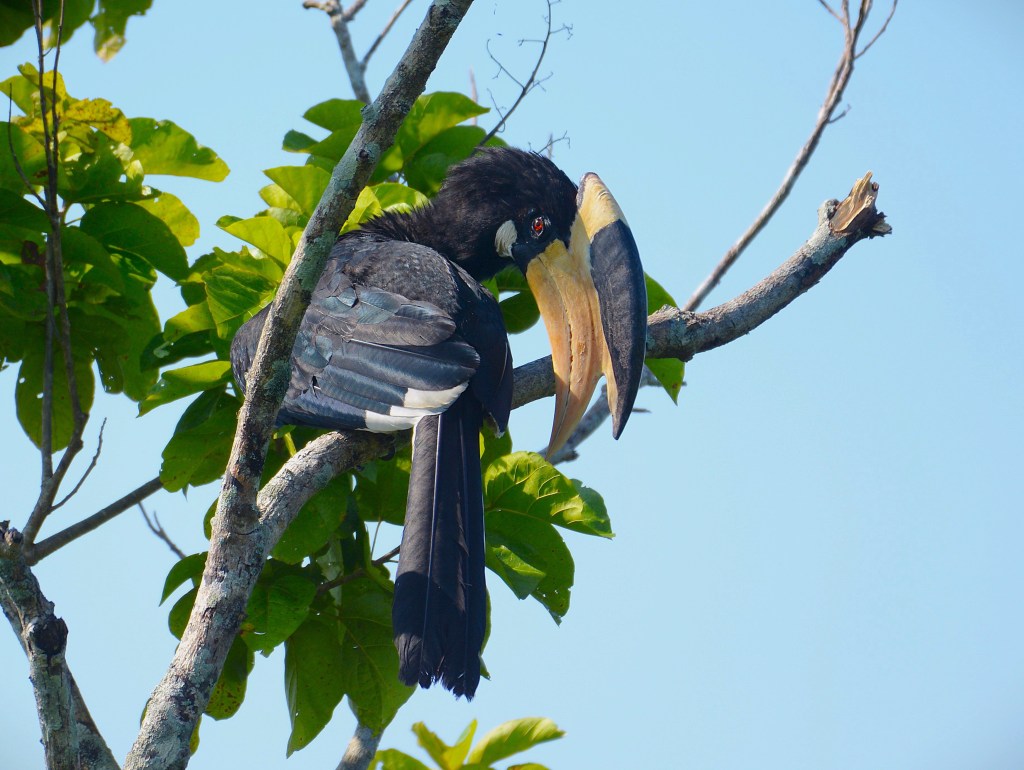
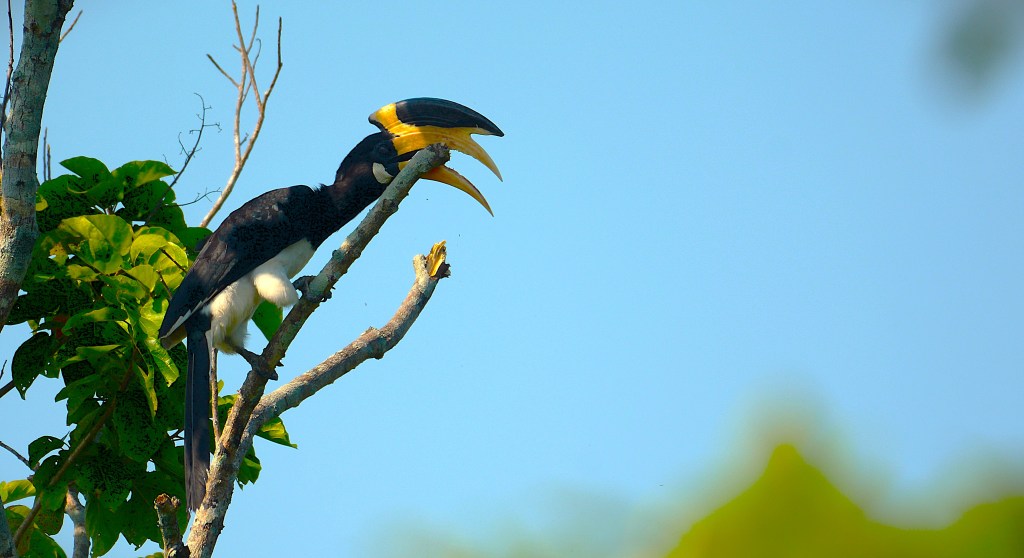
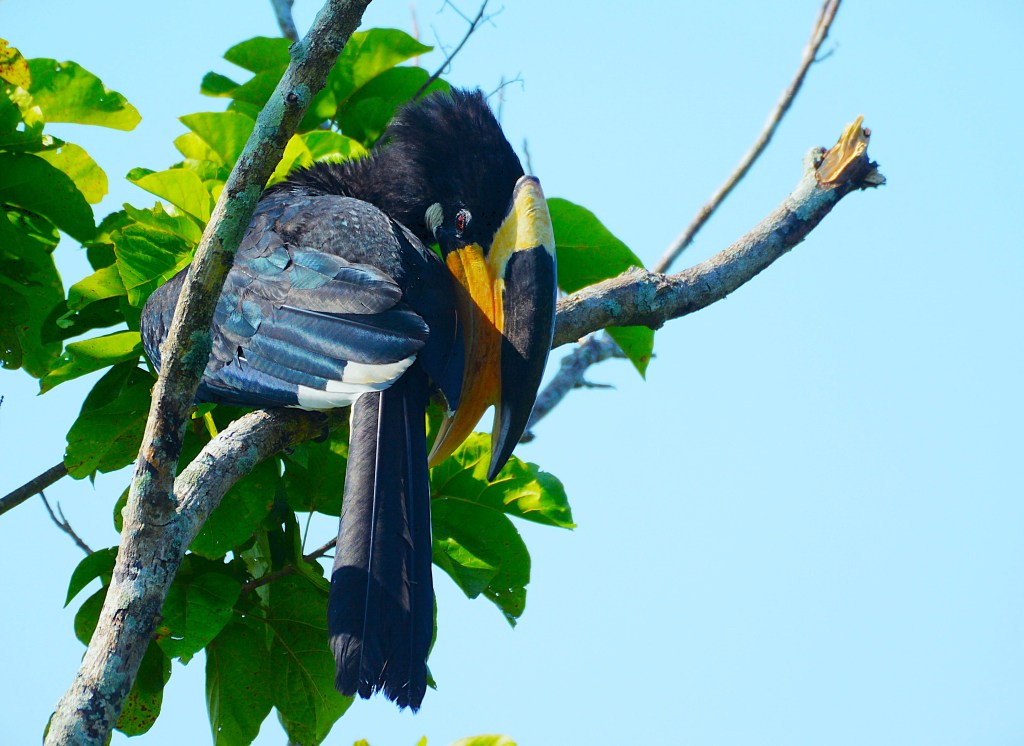
Possessing an off-white belly, a snow white throat patch, as well as white tail sides, and a patch of white forming the tail tip, this otherwise coal black species is cloaked by a glossy “goth” plumage. The bill of this rather clumsy looking bird species is mostly in a well-done subtle “yolk yellow” with the casque painted in a darker tone, largely in patchy amalgams of black. The female of the species possesses white orbitals surrounding the eye which the male lacks, which is the easiest method to identify genders. The eyes appear as a blazing red close-up. The casque of the species is unfound in juvenile birds, with the growth of the casque beginning in the first year of life, and developing throughout the bird’s life. The casque, mounted on top of the upper beak, is largely hollow and composed of keratin.
Being a resident breeder in Sri Lanka and India, birds of this species are distributed across three main South Asian regions: Central and Eastern India, Western Ghats and Sri Lanka. Inside Sri Lanka, the Malabar Pied Hornbill is largely found in the dry zone where altitudes are lower and the weather is mostly dry except for the seasonal rains.
Laying 2-3 eggs, the cavity [in upright woody frames] where the nest is built is sealed off by a mix of clay and mud, excretory droppings and mashed pulp of available fruit types. A small aperture only large enough for feeding the female of the species and the growing young, is the sole corridor of entry to a Hornbill nest.
Possessing an omnivorous palate, Hornbills of this species readily consume edible fruits, small mammals, miniature reptiles and many invertebrates such as buzzing insects. Figs make up one of the main components of their diet, while also consuming toxic plant species that are not readily eaten by most other animals, such as fruits of the strychnine tree, possessing seeds rich in the toxins strychnine and brucine.
These black and white hornbills are known to prefer an ecology comprising of deciduous or evergreen trees, while also resident in ecotones where biomes merge, contributing to the edge effect – a remarkable species richness found in merging and overlapping borderlands that is unfound in individual biomes.
Source: Wikipedia and E-Bird.
 Perched Poems: Avifauna in Sri Lanka